The LSU Scholarly Repository’s faculty-published books list serves as a permanent digital record of monographs authored or edited by LSU’s faculty. By centralizing these works, the LSU Libraries provide a testament to the university’s enduring commitment to research, creativity, and the advancement of knowledge.
If you are an LSU faculty member with a recently published monograph that is not contained in this list, please e-mail the institutional repository librarian at [email protected].
-

Dangerous Hoops: A Forensic Marketing Action Adventure
2011
D. Larry Crumbley and Thomas J. KaramPart crime novel, part textbook, Dangerous Hoops combines the principles of marketing and forensic accounting into a lively narrative to educate and entertain.
Set in the world of professional sports, Dangerous Hoops introduces FBI agent Bill Douglass as he pursues a deadly extortionist in order to save lives -- and spare the NBA from a public relations nightmare. The adventurous storyline -- complete with demands for cash and diamonds, poisoned collectors' cards, and botched drop-offs -- also explores aspects of business and marketing with examples from the world of pro basketball.
Both innovative and educational, Dangerous Hoops provides real instruction in a novel form and serves as a refreshing text for business majors and MBA students. -
Middle Management in Academic and Public Libraries
2011
Tom DiamondDrawing from the contributions of 20 academic and public library middle managers, this book reveals knowledge, expertise, and insights on a variety of management topics and responsibilities. Conflict resolution. Professional development. Budget cuts. Mentoring and performance evaluations. Time management. Diversity and workplace culture. All of these topics--as well as many others--represent challenges for library middle managers. This unique resource provides the key insight needed to successfully advance a middle management career to the highest levels in librarian administration. Middle Management in Academic and Public Libraries examines managerial topics such as the balance of authority and responsibility as viewed by middle managers, views of middle managers engaged as youth services librarians, collaboration efforts between public and technical services, integrating modern technologies into library services, and recommended career ladder steps. Each of the 20 contributors shares his or her specific expertise, resulting in an engaging compilation of great depth and breadth containing the "pearls of wisdom" that an aspiring middle manager needs in an academic or public library setting.
-
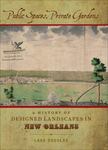
Public Spaces, Private Gardens: A History of Designed Landscapes in New Orleans
2011
Lake DouglasLandscape architect Lake Douglas employs written accounts, archival data, historic photographs, lithographs, maps, and city planning documents -- many of which have never before been published -- to explore public and private outdoor spaces in New Orleans and those who shaped them. The result offers the first in-depth examination of the city's landscape history.
Douglas presents this "beautiful and imposing" city as a work of art crafted by numerous influences. His survey from the colonial period to the twentieth century finds that geography, climate, and, above all, the multicultural character of its residents have made New Orleans unique in American landscape design history. French and Spanish settlers, Africans and Native Americans, as well as immigrants from Germany, Ireland, Italy, and other parts of the world all participated in creating this community's unique public and private landscapes. Places such as Congo Square, Audubon Park, the river levees, and "neutral grounds" -- local residents' own term for medians -- together with ordinary residential gardens are all testaments to the city's international imprint.
Douglas identifies five types of public and private designed landscapes in New Orleans: squares, linear open spaces, urban parks, commercial pleasure gardens, and domestic gardens. Discussing their design, function, and content, he shows how specific examples of each contribute to the city's unique character and also fit within the larger context of American landscape design history. Each type has its own complexion and reflects the influence of those who occupied it. Though New Orleanians lived in strata according to language, cultural identity, economics, and race, they found common ground, literally, in their community's landscapes.
Douglas's sweeping study, illustrated with over 90 color and black-and-white images, includes an exploration of archival horticultural books, almanacs, and periodicals; information about laborers who actually built landscapes; details of horticultural commerce, services, and marketing materials; and an exhaustive inventory of plants grown in New Orleans for agricultural, medicinal, and ornamental uses.
Public Spaces, Private Gardens provides an informative look at two hundred years of the designed landscapes and horticulture of New Orleans and a fresh perspective on one of America's most interesting and historic cities. -
U.S. Steel and Gary, West Virginia: Corporate Paternalism in Appalachia
2011
Ronald GarayThe company owned the houses. It owned the stores. It provided medical and governmental services. It provided practically all the jobs. Gary, West Virginia, a coal mining town in the southern part of the state, was a creation of U.S. Steel. And while the workers were not formally bound to the company, their fortunes like that of their community were inextricably tied to the success of U.S. Steel.
Gary developed in the early twentieth century as U.S. Steel sought a new supply of raw material for its industrial operations. The rich Pocahontas coal field in remote southern West Virginia provided the carbon-rich, low-sulfur coal the company required. To house the thousands of workers it would import to mine that coal bed, U.S. Steel carved a town out of the mountain wilderness. The company was the sole reason for its existence.
In this fascinating book, Ronald Garay tells the story of how industry-altering decisions made by U.S. Steel executives reverberated in the hollows of Appalachia. From the area s industrial revolution in the early twentieth century to the peak of steel-making activity in the 1940s to the industry s decline in the 1970s, "U.S. Steel and Gary, West Virginia" offers an illuminating example of how coal and steel paternalism shaped the eastern mountain region and the limited ways communities and their economies evolve. In telling the story of Gary, this volume freshly illuminates the stories of other mining towns throughout Appalachia.
At once a work of passionate journalism and a cogent analysis of economic development in Appalachia, this work is a significant contribution to the scholarship on U.S. business history, labor history, and Appalachian studies." -
Political Polling in the Digital Age: The Challenge of Measuring and Understanding Public Opinion
2011
Robert K. GoidelThe 2008 presidential election provided a "perfect storm" for pollsters. A significant portion of the population had exchanged their landlines for cellphones, which made them harder to survey. Additionally, a potential Bradley effect -- in which white voters misrepresent their intentions of voting for or against a black candidate -- skewed predictions, and aggressive voter registration and mobilization campaigns by Barack Obama combined to challenge conventional understandings about how to measure and report public preferences. In the wake of these significant changes, Political Polling in the Digital Age, edited by Kirby Goidel, offers timely and insightful interpretations of the impact these trends will have on polling.
In this groundbreaking collection, contributors place recent developments in public-opinion polling into a broader historical context, examine how to construct accurate meanings from public-opinion surveys, and analyze the future of public-opinion polling. Notable contributors include Mark Blumenthal, editor and publisher of Pollster.com; Anna Greenberg, a leading Democratic pollster; and Scott Keeter, director of survey research for the Pew Research Center.
In an era of increasingly personalized and interactive communications, accurate political polling is more difficult and also more important. Political Polling in the Digital Age presents fresh perspectives and relevant tactics that demystify the variable world of opinion taking.
-

"Light of My Life" : Love, Time and Memory in Nabokov's Lolita
2011
James Daniel Hardy and Ann MartinVladimir Nabokov, one of the 20th century's greatest novelists, is particularly remembered for his masterpiece Lolita . The present work examines the enduring themes of Lolita and places the novel in its biographical, social, cultural and historical contexts. Of particular interest are questions of love in all of its manifestations, the central problem of time in the book, and memory as it is explored in fictional memoir or, in this case, the central protagonist's "confession."
-
Engendering Curriculum History
2011
Petra Munro HendryHow can curriculum history be re-envisioned from a feminist, poststructuralist perspective? Engendering Curriculum History disrupts dominant notions of history as linear, as inevitable progress, and as embedded in the individual. This conversation requires a history that seeks re-memberance not representation, reflexivity not linearity, and responsibility not truth. Rejecting a compensatory approach to rewriting history, which leaves dominant historical categories and periodization intact, Hendry examines how the narrative structures of curriculum histories are implicated in the construction of gendered subjects. Five central chapters take up a particular discourse (wisdom, the body, colonization, progressivism and pragmatism) to excavate the subject identities made possible across time and space. Curriculum history is understood as an emergent, not a finished, processnbsp;- as an unending dialogue that creates spaces for conversation in which multiple, conflicting, paradoxical and contradictory interpretations can be generated as a means to stimulate more questions, not grand narratives.
-
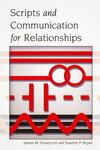
Scripts and Communication for Relationships
2011
James M. Honeycutt and Suzette P. BryanOver 200 years ago, Jane Austen, an astute observer of the rituals of late-eighteenth-century courtship wrote that a happy marriage was the result of chance. Modern relationship researchers have revealed that scripts concerning pair bonding rituals are actually constituted in a manner so as to leave little to chance when romantic attachments are formed, intensify, and sometimes dissolve.
In this introductory text, the authors discuss the basis of relationship scripts, emotions, imagery, and physiology of relationships including romance, friendship, work associates, mentors, and Facebook friends. They argue that people's expectations for relational development influence their communication, faith, and commitment in relationships. Misconstruing sexual or flirtatious intent, for example, is derived from having different scripts about attraction. The book also discusses abusive relationships including characteristics of abusers, stalking, and verbal and physical aggression.
Designed for classes in communication and relationships, interpersonal communication, intrapersonal communication, and communication and cognition, as well as across disciplines in psychology, sociology, family studies, and social work, this text provides a comprehensive overview of how scripts and communication are used in relationships. Guidelines based on developing and improving verbal and nonverbal communication competence are provided. A downloadable teacher's guide is available on request. -
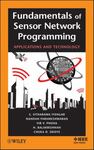
Fundamentals of Sensor Network Programming: Applications and Technology
2011
Sundararaja S. IyengarThis book provides the basics needed to develop sensor network software and supplements it with many case studies covering network applications. It also examines how to develop onboard applications on individual sensors, how to interconnect these sensors, and how to form networks of sensors, although the major aim of this book is to provide foundational principles of developing sensor networking software and critically examine sensor network applications.
-

Lessons from Ground Zero: Media Response to Terror
2011
Ralph S. Izard and Jay PerkinsIt ranked among journalism's finest hours. That is what was heard in the weeks following September 11, 2001. They made mistakes, of course, but in covering one of the biggest disasters ever to hit the United States, journalists used their training, their experience, their understanding, and their sensitivity to provide coverage that helped bring understanding and a sense of calm to the chaos. Their performance did not end with reporting the immediate impact of the catastrophe. They continued to analyze what happened, the impact to property and human lives, the impact on government and foreign relations.
Lessons from Ground Zero's examines journalism's efforts to cover a crisis, while analyzing journalism itself. Many lessons were evident to journalists as they sought to cope with the challenges of covering 9/11. The long-term question, however, is whether the answers they found served as catalysts for better journalism in the future, or whether they have been forgotten, put into the closet of old memories with no noticeable long-term impact.
This book analyzes journalists' response to 9/11 through scholarly research and interviews with many of the journalists who covered 9/11. Sometimes they do not agree, but all are thoughtful and each adds to understanding. Public opinion polls show clearly that citizens appreciated and responded to media coverage. Given that this occurred in a time frame in which public approval of American journalism had declined, it is reasonable to ask what the media did that was different from their normal practices. This book provides some of the answers.
-
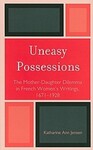
Uneasy Possessions: The Mother-Daughter Dilemma in French Women's Writings, 1671-1928
2011
Katharine Ann JensenIn Uneasy Possessions: The Mother-Daughter Dilemma in French Women's Writings, 1671-1928, Katharine Ann Jensen analyzes the work of five major French women writers, discovering a four-century pattern of mother-daughter relationships marked by domination, submission, and conflict. This groundbreaking study explores work of Marie-Madeleine de Lafayette, Marie de Sévigné, Elisabeth Vigée Lebrun, George Sand, and Colette, providing a new reading of women's history and offering a new understanding of female psychology. Jensen argues that conflict between the mothers and daughters depicted in these texts was the result of two contradictory ideologies. In order to pass proper feminine behavior on to their daughters, mothers were encouraged to construe daughters as part of themselves, even as daughters were expected to adopt their mothers' wishes as their own. At the same time, a developing individualism created a conflict between the daughter's desire for autonomy and her mother's wish to be recognized for having raised a perfect daughter-alter ego.
Despite vast changes in social organization in France over the four centuries of this study, the mother-daughter ideology remained effectively the same. To keep their daughters virgins, mothers were expected to form their daughters in their own image-as a mirror reflection. Mother-daughter reflectivity extended even into the marriage bed, as daughters were taught to remain faithful and to submit to (male) authority throughout their lives. Thus, the daughter's sexuality was channeled into producing legitimate offspring while the mother's ambition was confined to working on her daughter, rather than focused on creating cultural works that might compete with men's. Mothers were rewarded with the narcissistic satisfaction of viewing their filial creations as a socially sanctioned work of art: daughters thus functioned as possessions. -

Best Practices for Corporate Libraries
2011
Sigrid KelseyIn this book, experts in the field describe best practices based on their experiences in corporate libraries worldwide. With information driving today's global economy, corporate librarians must become even more proactive in their daily assignments. Best Practices for Corporate Libraries will help them do just that through a series of papers that offer an international array of opinion and practice methods.This book showcases current practices in corporate library functions and suggests best practices for current librarians. It also examines some of the changes in librarianship that have arisen from changes in how information is provided and how corporations are now organized. Topics covered include library service functions, return on investment, measurements and evaluation, collaboration, communication and outreach in corporations, managing changes in the corporation and in the library, and legal issues such as intellectual property concerns. Drawing from the experience of 25 contributors, the book includes chapters covering corporate libraries in the United States, United Kingdom, India, Barbados, and Nigeria.
-
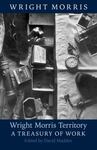
Wright Morris Territory: A Treasury of Work
2011
David MaddenBest known for his novels, including the National Book Award winners The Field of Vision and Plains Song , Nebraska-born author Wright Morris has long been regarded as one of America's most gifted writers. This volume, culling work from the photo-text books, criticism, and numerous short stories frequently overlooked among his oeuvre, reflects the true breadth of this quintessentially American artist's talents. As such, it offers a fascinating overview of Morris's inspiring accomplishments in multiple genres.
While embracing the prose for which Morris is justly famous, this treasury of work also highlights his photography and other literary genres, including hard-to-find stories first published in magazines, some of which were early drafts of future novels.
Edited by Morris's long-time friend David Madden, this one-of-a-kind collection captures a man of multifarious genius. Replete with interviews, photography, a biographical sketch, suggestions for further reading, and Morris's inimitable writing, this compendium is an indispensable resource for those who wish to understand and appreciate the brilliance and virtuosity of one of America's true talents. -
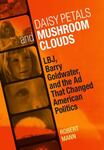
Daisy Petals and Mushroom Clouds: LBJ, Barry Goldwater, and the Ad that Changed American Politics
2011
Robert MannThe grainy black-and-white television ad shows a young girl in a flower-filled meadow, holding a daisy and plucking its petals, which she counts one by one. As the camera slowly zooms in on her eye, a man's solemn countdown replaces hers. At zero the little girl's eye is engulfed by an atomic mushroom cloud. As the inferno roils in the background, President Lyndon B. Johnson's voice intones, "These are the stakes -- to make a world in which all of God's children can live, or to go into the dark. We must either love each other, or we must die."
In this thought-provoking and highly readable book, Robert Mann provides a concise, engaging study of the "Daisy Girl" ad, widely acknowledged as the most important and memorable political ad in American history. Commissioned by Johnson's campaign and aired only once during Johnson's 1964 presidential contest against Barry Goldwater, it remains an iconic piece of electoral propaganda, intertwining cold war fears of nuclear annihilation with the increasingly savvy world of media and advertising. Mann presents a nuanced view of how Johnson's campaign successfully cast Barry Goldwater as a radical too dangerous to control the nation's nuclear arsenal, a depiction that sparked immediate controversy across the United States.
Repeatedly analyzed in countless books and articles, the spot purportedly destroyed Goldwater's presidential campaign. Although that degree of impact on the Goldwater campaign is debatable, what is certain is that the ad ushered in a new era of political advertising using emotional appeals as a routine aspect of campaign strategy. -
Political Communication: The Manship School Guide
2011
Robert MannA new era of political power has arrived, one in which the social media forces of Facebook, YouTube, and Twitter indisputably play a larger role in the political process. In this revised and expanded edition of Political Communication: The Manship School Guide, edited by Robert Mann and David D. Perlmutter, contributors discuss technological changes in the context of studies and techniques that remain unchallenged, resulting in a truly comprehensive manual of the world of political communication.
This shift in communication began with Howard Dean's social media interaction between voters and candidates. Later, Barack Obama redefined these techniques during his march to the White House. This intriguing development in political campaigns focuses the impact of social media on political consultation and communication, and this volume provides an up-to-date and peerless guide to the events, methods, technologies, venues, theories, and applications of political dialogues.
More than just a how-to primer, this new edition also expertly explains the process behind the political engine. Political Communication: The Manship School Guide includes individual essays that tackle the growing myths revolving around politics, such as the political money-monster and the "Mr. Smith Goes to Washington"--candidate fantasy.
Twenty-seven chapters from a variety of contributors -- including academics, journalists, and political professionals -- provide insightful, astute, and critical essays for a deeper understanding of political communication and the many roles the public has played in twenty-first-century politics.
With this second edition, Political Communication: The Manship School Guide offers readers a valuable resource that clarifies the confusing world of politics. -

International Handbook of Autism and Pervasive Developmental Disorders
2011
Johnny L. MatsonSince the early 1940s, when first identified as childhood psychosis and autistic psychopathy , autism spectrum disorder (ASD) has continued to burgeon into a major focus of inquiry and interest among researchers, practitioners, and the public alike. With each passing decade, the number of scholarly articles addressing ASD and related disabilities continues to soar. Today, thousands of papers on autism are published annually across various disciplines and journals, making it challenging - if not impossible - to keep pace with, let alone synthesize, all the latest developments.
Based on a solid historical foundation of autism theory and research, the International Handbook of Autism and Pervasive Developmental Disorders integrates the broad scholarly base of literature with a trenchant analysis of the state of the field in nosology, etiology, assessment, and treatment. Its expert contributors examine recent findings and controversies (e.g., how prevalent autism actually is), along with longstanding topics of interest as well as emerging issues.
Coverage includes:
A survey of diagnostic criteria and assessment strategies. Genetic, behavioral, biopsychosocial, and cognitive models. Psychiatric disorders in persons with ASD. Theory of mind and facial recognition. Diagnostic instruments for assessing core features and challenging behaviors. Evidence-based psychosocial, pharmacological, and integrative treatments. Interventions specifically for adults with ASD. Training issues for professionals and parents. A review of findings of successful and promising therapies, coupled with guidance on how to distinguish between dubious and effective treatments.
The International Handbook of Autism and Pervasive Developmental Disorders is an indispensable resource for researchers, professors, graduate students, and allied practitioners in clinical child and school psychology, child and adolescent psychiatry, education, social work, rehabilitation, pediatric medicine, and developmental psychology.
-
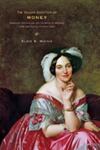
The Vulgar Question of Money: Heiresses, Materialism, and the Novel of Manners from Jane Austen to Henry James
2011
Elise Browning MichieIt is a familiar story line in nineteenth-century English novels: a hero must choose between money and love, between the wealthy, materialistic, status-conscious woman who could enhance his social position and the poorer, altruistic, independent-minded woman whom he loves. Elsie B. Michie explains what this common marriage plot reveals about changing reactions to money in British culture.
It was in the novel that writers found space to articulate the anxieties surrounding money that developed along with the rise of capitalism in nineteenth-century England. Michie focuses in particular on the character of the wealthy heiress and how she, unlike her male counterpart, represents the tensions in British society between the desire for wealth and advancement and the fear that economic development would blur the traditional boundaries of social classes.
Michie explores how novelists of the period captured with particular vividness England's ambivalent emotional responses to its own financial successes and engaged questions identical to those raised by political economists and moral philosophers. Each chapter reads a novelist alongside a contemporary thinker, tracing the development of capitalism in Britain: Jane Austen and Adam Smith and the rise of commercial society, Frances Trollope and Thomas Robert Malthus and industrialism, Anthony Trollope and Walter Bagehot and the political influence of money, Margaret Oliphant and John Stuart Mill and professionalism and managerial capitalism, and Henry James and Georg Simmel and the shift of economic dominance from England to America.
Even the great romantic novels of the nineteenth century cannot disentangle themselves from the vulgar question of money. Michie's fresh reading of the marriage plot, and the choice between two women at its heart, shows it to be as much about politics and economics as it is about personal choice.
-

Matroid Theory
2011
James G. Oxley* What is the essence of the similarity between linearly independent sets of columns of a matrix and forests in a graph?* Why does the greedy algorithm produce a spanning tree of minimum weight in a connected graph?* Can we test in polynomial time whether a matrix is totally unimodular?Matroid theory examines and answers questions like these. Seventy-five years of study of matroids has seen the development of a rich theory with links to graphs, lattices, codes, transversals, and projective geometries. Matroids are of fundamental importance in combinatorial optimization and theirapplications extend into electrical and structural engineering.This book falls into two parts: the first provides a comprehensive introduction to the basics of matroid theory, while the second treats more advanced topics. The book contains over seven hundred exercises and includes, for the first time in one place, proofs of all of the major theorems in thesubject. The last two chapters review current research and list more than eighty unsolved problems along with a description of the progress towards their solutions.
-
Films With Legs: Crossing Borders With Foreign Langauge Films
2011
Rosemary A. PetersFilms With Legs: Crossing Borders with Foreign Language Films addresses the ways international cinematic traditions both erect borders and blur them or tear them down. Each chapter of this book examines real and perceived borders, their representations on the screen and their manifestations in filmic texts that can also be cultural documents and political statements. The fifteen articles included here discuss films made by twenty-four directors, with dialogues in nine foreign languages, representing cultural aspects from twelve countries and five continents. From Algeria to Bulgaria, Germany to Israel, India to Argentina, the films studied in this book have legs that cross many borders and take their audiences on distant journeys. Simultaneously, these films comment on the ever-expanding nature of cinema itself, of filmic language and of film as language, and discuss how borders are constructed on the screen, not just in fences and walls and boundaries, but also in dialogue and dialect, speech and accent and silence.
-

Imagining the Age of Goethe in German Literature, 1970-2010
2011
John David PizerThe first scholarly book treating the huge amount of recent and contemporary fiction set in the Age of Goethe and employing Goethe and other figures of the period as characters.The Age of Goethe is widely viewed as the apogee of German culture. Its writers and thinkers, especially Goethe, have been exalted as role models for life and art, particularly after 1945. Yet in the 1970s, a new generation of German writers in both East and West rebelled against the postwar hagiography, taking up a tradition of imaginatively engaging with the giants of the period, casting them in major roles in their works in order to critique the nation's past and its present, a tradition that has been carried on by more contemporary writers. This is the first book-length study devoted to modern German "author-as-character" fiction set in the Age of Goethe. It shows for thefirst time in a sustained manner the powerful hold the Goethezeit continues to exercise on the imagination of many of Germany's leading writers. This inner-German dialogue across the ages provides an important corrective to the dominant critical view that contemporary German-language literature is composed primarily under the sign of both globalization and the influence of mass American culture. The book will be of interest to both scholars of theGoethezeit and of contemporary German literature and culture. John D. Pizer is Professor of German and Comparative Literature at Louisiana State University.
-
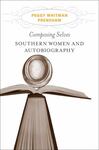
Composing Selves: Southern Women and Autobiography
2011
Peggy Whitman PrenshawIn Composing Selves, award-winning author Peggy Whitman Prenshaw provides the most comprehensive treatment of autobiographies by women in the American South. This long-anticipated addition to Prenshaw's study of southern literature spans the twentieth century as she provides an in-depth look at the life-writing of eighteen women authors.
Composing Selves travels the wide terrain of female life in the South, analyzing various issues that range from racial consciousness to the deflection of personal achievement. All of the authors presented came of age during the era Prenshaw refers to as the "late southern Victorian period," which began in 1861 and ended in the 1930s. Belle Kearney's A Slaveholder's Daughter (1900) with Elizabeth Spencer's Landscapes of the Heart and Ellen Douglas's Truth: Four Stories I Am Finally Old Enough to Tell (both published in 1998) chronologically bookend Prenshaw's survey.
She includes Ellen Glasgow's The Woman Within, Marjorie Kinnan Rawlings's Cross Creek, Bernice Kelly Harris's Southern Savory, and Zora Neale Hurston's Dust Tracks on a Road. The book also examines Katharine DuPre Lumpkin's The Making of a Southerner and Lillian Smith's Killers of the Dream.
In addition to exploring multiple themes, Prenshaw considers a number of types of autobiographies, such as Helen Keller's classic The Story of My Life and Anne Walter Fearn's My Days of Strength. She treats narratives of marital identity, as in Mary Hamilton's Trials of the Earth, and calls attention to works by women who devoted their lives to social and political movements, like Virginia Durr's Outside the Magic Circle.
Drawing on many notable authors and on Prenshaw's own life of scholarship, Composing Selves provides an invaluable contribution to the study of southern literature, autobiography, and the work of southern women writers. -
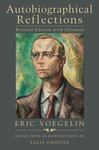
Autobiographical Reflections with Glossary
2011
Ellis SandozAutobiographical Reflections is a window into the mind of a man whose reassessment of the nature of history and thought has overturned traditional approaches to, and appraisals of, the Western intellectual tradition. Here we encounter the motivations for Voegelin's work, the stages in the development of his unique philosophy of consciousness, his key intellectual breakthroughs, his theory of history, and his diagnosis of the political ills of the modern age. Included in this revised volume is a glossary of terms used in Voegelin's writings. The glossary lists, defines, and illustrates from the author's writings many of the key terms employed, paying particular attention to the Greek terms. Together, the glossary and enlarged index systematically include names, subjects, ideas, writings, and terms, making this volume an indispensable help for any serious study of Eric Voegelin's oeuvre.
-
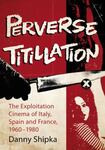
Perverse Titillation: The Exploitation Cinema of Italy, Spain, and France, 1960-1980
2011
Danny ShipkaThe exploitation film industry of Italy, Spain and France during the height of its popularity from 1960 to 1980 is the focus of this entertaining history. With subject matter running the gamut from Italian zombies to Spanish werewolves to French lesbian vampires, the shocking and profoundly entertaining motion pictures of the "Eurocult" genre are discussed from the standpoint of the films and the filmmakers, including such internationally celebrated auteurs as Mario Bava, Jess Franco, Jean Rollin and Paul Naschy.
The Eurocult phenomenon is also examined in relation to the influences that European culture and environment have had on the world of exploitation cinema. The author's insight and expertise contribute to a greater understanding of what made these films special--and why they have remained so popular to later generations.
-

Damage Mechanics and Micromechanics of Localized Fracture Phenomena in Inelastic Solids
2011
George Z. VoyiadjisThis book resulted from a series of lecture notes presented in CISM, Udine in July 7 -11, 2008. The papers inform about recent advances in continuum damage mechanics for both metals and metal matrix composites as well as the micromechanics of localization in inelastic solids. Also many of the different constitutive damage models that have recently appeared in the literature and the different approaches to this topic are presented, making them easily accessible to researchers and graduate students in civil engineering, mechanical engineering, engineering mechanics, aerospace engineering, and material science.