The LSU Scholarly Repository’s faculty-published books list serves as a permanent digital record of monographs authored or edited by LSU’s faculty. By centralizing these works, the LSU Libraries provide a testament to the university’s enduring commitment to research, creativity, and the advancement of knowledge.
If you are an LSU faculty member with a recently published monograph that is not contained in this list, please e-mail the institutional repository librarian at [email protected].
-
Information Literacy Programs in the Digital Age: Educating College and University Students Online
2007
Alice Daugherty and Michael F. RussoInformation Literacy Programs in the Digital Age is a showcase of 24 unique online information literacy projects from community colleges, research universities and liberal arts colleges. Readers will find a wide array of program types, subject bases and institutional drivers in this rich compendium. Chapter authors discuss the development of online information literacy courses and tutorials, along with best practices for embedding information literacy instruction into discipline courses and programs.
This book is essential reading for any librarian charged with planning and implementing an online information literacy program. Librarians already working in online tutorial design, campus collaboration in online learning environments or the refinement of effective online information literacy programs will also find much to learn. -
Interrogating America Through Theatre and Performance
2007
William W. DemastesThis collection of essays dissects American plays, movies and other performance types that examine America and its history and culture. From Amerindian stage performances to AIDS and post-9/11 America, it displays the various and important ways theatre and performance studies have examined and conversed with American culture and history.
-
Roanoke, Virginia, 1882-1912: Magic City of the New South
2007
Rand DotsonRoanoke, Virginia, 1882-1912, tells the story of a city that for a brief period was widely hailed as a regional model for industrialization as well as the ultimate success symbol for the rehabilitation of the former Confederacy. In a region where modernization seemed to move at a glacial pace, those looking for signs of what they were triumphantly calling the New South pointed to Roanoke. No southern city grew faster than Roanoke did during the 1880s. A hardscrabble Appalachian tobacco depot originally known by the uninspiring name of Big Lick, it became a veritable boomtown by the end of the decade as a steady stream of investment and skilled manpower flowed in from north of the Mason-Dixon line. The first scholarly treatment of Roanoke's early history, the book explains how native businessmen convinced a northern investment company to make their small town a major railroad hub. It then describes how that venture initially paid off, as the influx of thousands of people from the North and the surrounding Virginia countryside helped make Roanoke--presumptuously christened the Magic City by New South proponents--the state's third-largest city by the turn of the century. Rand Dotson recounts what life was like for Roanoke's wealthy elites, working poor, and African American inhabitants. He also explores the social conflicts that ultimately erupted as a result of well-intended reforms initiated by city leaders. Dotson illustrates how residents mediated the catastrophic Depression of 1893 and that year's infamous Roanoke Riot, which exposed the facade masking the city's racial tensions, inadequate physical infrastructure, and provincial mentality of the local populace. Dotson thendetails the subsequent attempts of business boosters and progressive reformers to attract the additional investments needed to put their city back on track. Ultimately, Dotson explains, Roanoke's early struggles stemmed from its business leaders' unwavering belief that economic development would serve as the panacea for all of the town's problems. This insightful social history of Roanoke is a significant work, sure to attract readers with an interest in urbanization, race relations, southern studies, Appalachian studies and progressive reform.
-
Theory and Reality in Financial Economics: Essays Toward a New Political Finance
2007
George M. FrankfurterThe current literature on financial economics is dominated by neoclassical dogma and, supposedly, the notion of value-neutrality. However, the failure of neoclassical economics to deal with real financial phenomena suggests that this might be too simplistic of an approach.This book consists of a collection of essays dealing with financial markets' imperfections, and the inability of neoclassical economics to deal with such imperfections. Its central argument is that financial economics, as based on the tenets of neoclassical economics, cannot answer or solve the real-life problems that people face. It also shows the direct relationship between economics and politics - something that is usually denied in academic models, given that science is supposed to be value-neutral. In this thought-provoking and avant-garde book, the author not only exposes what has gone wrong, but also suggests reforms to both the academic and the political-economic systems that might help make markets fair rather than efficient. Drawing on interdisciplinary fields, this book will appeal to readers who are interested in finance, economics, business, the political economy and philosophy.
-
Motor Learning and Control: Concepts and Applications
2007
Richard A. MagillDesigned for introductory students, this text provides the reader with a solid research base and defines difficult material by identifying concepts and demonstrating applications for each of those concepts. Motor Learning and Control: Concepts and Applications also includes references for all relevant material to encourage students to examine the research for themselves.
-
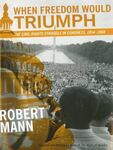
When Freedom Would Triumph: The Civil Rights Struggle in Congress, 1954-1968
2007
Robert MannWhen Freedom Would Triumph recalls the most significant and inspiring legislative battle of the twentieth century -- the two decades of struggle in the halls of Congress that resulted in civil rights for the descendants of American slaves. Robert Mann's comprehensive analysis shows how political leaders in Washington -- Lyndon Johnson, Hubert Humphrey, John F. Kennedy, and others -- transformed the ardent passion for freedom -- the protests, marches, and creative nonviolence of the civil rights movement -- into concrete progress for justice. A story of heroism and cowardice, statesmanship and political calculation, vision and blindness, When Freedom Would Triumph, an abridged and updated version of Mann's The Walls of Jericho: Lyndon Johnson, Hubert Humphrey, Richard Russell, and the Struggle for Civil Rights, is a captivating, thought-provoking reminder of the need for more effective government.
Mann argues that the passage of civil rights laws is one of the finest examples of what good is possible when political leaders transcend partisan political differences and focus not only on the immediate judgment of the voters, but also on the ultimate judgment of history. As Mann explains, despite the opposition of a powerful, determined band of southern politicians led by Georgia senator Richard Russell, the political environment of the 1950s and 1960s enabled a remarkable amount of compromise and progress in Congress. When Freedom Would Triumph recalls a time when statesmanship was possible and progress was achieved in ways that united the country and appealed to our highest principles, not our basest instincts. Although the era was far from perfect, and its leaders were deeply flawed in many ways, Mann shows that the mid-twentieth century was an age of bipartisan cooperation and willingness to set aside party differences in the pursuit of significant social reform. Such a political stance, Mann argues, is worthy of study and emulation today. -
From Shane to Kill Bill: Rethinking the Western
2007
Patrick McGeeFrom Shane to Kill Bill: Rethinking the Western is an original and compelling critical history of the American Western film.
Provides an insightful overview of the American Western genre Covers the entire history of the Western, from 1939 to the present Analyses Westerns as products of a genre, as well as expressions of political and social desires Deepens an audience's understanding of the genre's most important works, including Shane, Stagecoach , The Searchers, Unforgiven , and Kill Bill Contains numerous illustrations of the films and issues discussed.
-
Inside the Church of Flannery O'Connor: Sacrament, Sacramental, and the Sacred in her Fiction
2007
Joanne Halleran McMullenInside the Church of Flannery O?Connor offers significant new essays by leading scholars?William A. Sessions, John F. Desmond, Jill Pelaez Baumgaertner, Ralph C. Wood, and John R. May'who have advanced the codification of O?Connor as a writer preoccupied with religious, and especially Catholic, themes.In counterbalance, the collection presents voices of sharp dissent? chiefly Joanne Halleran McMullen and Timothy P. Caron. These scholars find themselves at odds with O?Connor's own interpretations and with much of the existing scholarship concerning her work. Contributors Helen R. Andretta, Stephen C. Behrendt, and Robert Donahoo explore theological, philosophical, and scholarly issues completely outside this dichotomy, such as comparative literature and the influence of consumer culture on her writing. The promise of such a diverse collection rests in the dialogues between and among their essays. One will not find consensus within these pages, nor even a settled path for the future of O?Connor studies. Rather, the collection puts on record the state of affairs during this period of transition, when those scholars who knew O?Connor personally are declining in number and canonical authority, and those who know her as a field of study as opposed to a flesh-and-blood human being are in ascension. Both groups have much to learn from each other.
-
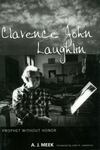
Clarence John Laughlin: Prophet Without Honor
2007
A. J. MeekClarence John Laughlin (1905- 1985) of New Orleans is arguably the father of photographic surrealism in America. He was best known for his photographs of old plantation homes and his book, Ghosts along the Mississippi, but his life's work was varied and broad. Laughlin was a mainstream photographer who was published in many national magazines. His contemporaries and associates included photographers Minor White, Wynn Bullock, and Edward Weston, as well as legendary editor Maxwell Perkins. Laughlin was, however, often marginalized and ignored due to misunderstandings of his work and his often volatile personality. Equally annoying to many was his devotion to capturing images that depicted, with a zealous and sometimes disturbing sense of self-righteousness, the evil and poverty that he saw in the world. A. J. Meek looks into the controversial life of one of the greatest photographers in American history. Through interviews with Laughlin's colleagues, friends, and family, the author details the tumultuous connection between the struggles of the artist's life, including strained professional relationships and failed marriages, and the work that brought him fame. A. J. Meek is professor emeritus of art at Louisiana State University. His previous books include Gettysburg to Vicksburg: The Five Original Civil War Battlefield Parks, Gardens of Louisiana: Places of Work and Wonder, Exploring Black and White Photography, and Red Pepper Paradise: Avery Island, Louisiana. John H. Lawrence is director of museum programs at The Historic New Orleans Collection.
-
A Companion to William Faulkner
2007
Richard C. MorelandThis comprehensive Companion to William Faulkner reflects the current dynamic state of Faulkner studies.
Explores the contexts, criticism, genres and interpretations of Nobel Prize-winning writer William Faulkner, arguably the greatest American novelist Comprises newly-commissioned essays written by an international contributor team of leading scholars Guides readers through the plethora of critical approaches to Faulkner over the past few decades Draws upon current Faulkner scholarship, as well as critically reflecting on previous interpretations
-
Celebrations and Connections in Hispanic Literature
2007
Andrea E. Morris and Margaret ParkerThe volume Celebrations and Connections in Hispanic Literature is itself a celebration of a tradition of scholarly dialogue in a relaxed, festive atmosphere. The articles included here began as papers presented at the 25th Anniversary Edition of the Biennial Louisiana Conference on Hispanic Languages and Literatures, held in Baton Rouge Louisiana, February 23-24, 2006. Each of the authors responds in innovative ways to the idea of connecting texts, contexts, and genres, as well as to the disconnect that is often present between what we perceive as Hispanic identity and the experience of those left on the margin. Topics include Celebrating and Rewriting Difference: (De)colonized Identities, Word and Image in the Spanish Golden Age, and Latin American Literature and Politics, among others. The collection is demonstrative of current trends in Hispanic literary and cultural criticism, which are increasingly less bound by traditional regional and temporal constructs. While each author's research is rooted in a specific socio-historic context, their combined contributions to the present volume provide a far-reaching perspective that expands the notion of text to go beyond the literary and engage a multitude of disciplines. ait emphasizes the often illuminating connections among literary and cultural texts which can be drawn when one conceives of Hispanism and its literary and cultural fields as shaped by trends and issues, rather than divided by periods and regions (...) What strikes me most is the newness of each piece. While each is very well informed, none rehearses old historical or theoretical ground more than is absolutely necessary, but rather presents either a new or overlooked text or offers a new approach. Leslie Bary, University of Louisiana, Lafayette An impressive array of well-established and younger scholars has produced a volume whose scope is the entire Hispanic world extending from the Golden Age to the contemporary era. (...) This volume will be of interest to all scholars and critics of Hispanic literature as well as to historians and political scientists. Many of the essays challenge traditional assumptions about the colonization of the Hispanic world as well as the motivations for the revolutions for independence whose influence is still strongly alive in contemporary treatments of fundamental questions of national identity, race, class, and gender. C. Chris Soufas, Jr., Tulane University.
-
Murmur: Approximation Démontable
2007
Laura MullenPoetry. Cross-Genre."Wildly absorbing, MURMUR is a gorgeous genre-bender: detective novel, film noir and memoir (and autopsy of all three), tricked out with bloody mirrors, blue murder, mutable coffins, loopy interrogations and a dead bombshell's shoes. This is one fabulous book!"--Rikki Ducornet
"Laura Mullen floods the confines of the 'detective novel' with all possible events, all murderers and all murdered so that, at any point in the narrative, everything has happened and everyone has done it. MURMUR is a further-fiction of displacement and testimony that calls us to the task of deciding not only whether we would or would not do a thing but also whether we even know the difference between the two. A gripping exploration into the brutality of our time that you will not soon forget."--Renee Gladman
"MURMUR collects an astonishing array of sorties into language as a terra incognita occasioning the uncanny and always troubled confluence of the subject, the bodies it inhabits and the linguistic remainder. Mullen animates narrative at the level of its basic semantic pulse. You'll meet a talking corpse, a severed head, a heart drawn on an open palm and the gradual destruction of a face. Mullen is as much an expert in the comic and grotesque, as in the restless and anonymous. With a majestically controlled impatience she constructs a textual space both unnerving and familiar. These are splendid texts of the nameless ones (a 'messenger,' the 'caller,' the 'reader') who interrupt and witness the murmur of the linked deictic shadows of a recurring 'she' and 'he.' Never since Beckett has the unnamed been so chilling precisely because it is unnameable."--Steve McCaffery
"Laura Mullen's MURMUR finds the crime in the moments between actions, in language overheard, doubling back, in a style both unnerving and comforting; always midsentence we feel death never dying, 'real despite or because of the staging,' and in the background, Duras, Hitchcock--the passions of mundane horrors always ready for our pleasure, discovery. MURMUR stays the mind like an unforgettable dream."--Thalia Field -
Troubled Waters: Steamboat Disasters, River Improvements, and American Public Policy, 1821-1860
2007
Paul F. PaskoffIn Troubled Waters, Paul F. Paskoff offers a comprehensive examination of the federal government's river improvements program, which aimed to reduce hazards to navigation on the great rivers of America's interior during the early and mid-nineteenth century. Danger on the rivers came in a variety of forms. Shoals, rapids, ice, rocks, sandbars, and uprooted trees and submerged steamboat wrecks lodged in river beds were the most common perils and accounted for the largest number of steamboat disasters. This daunting array of river hazards required a similarly broad range of efforts to remove or at least ameliorate them. Against a variety of obstacles -- natural, political, and technological -- the river improvements program succeeded in reducing the rate of steamboat loss, even as steamboat traffic dramatically increased. Its success, Paskoff argues, demonstrates that the federal government was far more active than generally thought in promoting economic growth and development in the years leading up to the Civil War.The river improvements program was one of the most volatile issues in national, sectional, and state politics, touching on questions of economic development, constitutional law, partisan politics, and sectional rivalry. Paskoff examines the controversial program from its beginnings during the early republic to 1844, giving careful attention to the policies of Andrew Jackson's administration. He explores the array of objections to the program -- some grounded in a strict interpretation of the Constitution and others in a concern over alleged federal wantonness, corruption, and waste -- and follows the political story through the administration of James K. Polk forward to secession. Paskoff also explains the fiscal, economic, and technological aspects of the hazard problem and its solution, analyzing the federal government's fiscal condition, its capacity to undertake such an ambitious program, and the influence of conditions in the larger economy, including effects of the Mexican War, upon the federal government's finances.Paskoff's lively analysis rests on a bedrock of impressive quantitative evidence, including databases containing every documented steamboat wreck -- more than 1,200 -- on American rivers, lakes, and coastal waters; construction and engine data for more than 600 steamboat packets; and all relevant federal appropriations and expenditures measures, more than 2,300 spending projects in all. Vigorously researched and vividly told, Troubled Waters is an essential contribution to the history of internal improvements in the antebellum United States.
-
Troubled Waters: Steamboat Disasters, River Improvements, and American Public Policy, 1821-1860
2007
Paul F. PaskoffIn Troubled Waters, Paul F. Paskoff offers a comprehensive examination of the federal government's river improvements program, which aimed to reduce hazards to navigation on the great rivers of America's interior during the early and mid-nineteenth century. Danger on the rivers came in a variety of forms. Shoals, rapids, ice, rocks, sandbars, and uprooted trees and submerged steamboat wrecks lodged in river beds were the most common perils and accounted for the largest number of steamboat disasters. This daunting array of river hazards required a similarly broad range of efforts to remove or at least ameliorate them. Against a variety of obstacles -- natural, political, and technological -- the river improvements program succeeded in reducing the rate of steamboat loss, even as steamboat traffic dramatically increased. Its success, Paskoff argues, demonstrates that the federal government was far more active than generally thought in promoting economic growth and development in the years leading up to the Civil War.The river improvements program was one of the most volatile issues in national, sectional, and state politics, touching on questions of economic development, constitutional law, partisan politics, and sectional rivalry. Paskoff examines the controversial program from its beginnings during the early republic to 1844, giving careful attention to the policies of Andrew Jackson's administration. He explores the array of objections to the program -- some grounded in a strict interpretation of the Constitution and others in a concern over alleged federal wantonness, corruption, and waste -- and follows the political story through the administration of James K. Polk forward to secession. Paskoff also explains the fiscal, economic, and technological aspects of the hazard problem and its solution, analyzing the federal government's fiscal condition, its capacity to undertake such an ambitious program, and the influence of conditions in the larger economy, including effects of the Mexican War, upon the federal government's finances.Paskoff's lively analysis rests on a bedrock of impressive quantitative evidence, including databases containing every documented steamboat wreck -- more than 1,200 -- on American rivers, lakes, and coastal waters; construction and engine data for more than 600 steamboat packets; and all relevant federal appropriations and expenditures measures, more than 2,300 spending projects in all. Vigorously researched and vividly told, Troubled Waters is an essential contribution to the history of internal improvements in the antebellum United States.
-
Materials Selection and Applications in Mechanical Engineering
2007
Aravamudhan RamanUnlike any other text of its kind, Materials Selection and Applications in Mechanical Engineering contains complete and in-depth coverage on materials of use, their principles, processing and handling details; along with illustrative examples and sample projects. It clearly depicts the needed topics and gives adequate coverage with ample examples so that ME students can appreciate the relevance of materials to their discipline.
Featuring the basic principles of materials selection for application in various engineering outcomes, the contents of this text follow those of the common first-level introductory course in materials science and engineering. Directed toward mechanical engineering, it introduces the materials commonly used in this branch, along with an exhaustive description of their properties that decide their functional characteristics and selection for use, typical problems encountered during application due to improper processing or handling of materials, non-destructive test procedures used in maintenance to detect and correct problems, and much more. What's more, numerous examples and project-type analyses to select proper materials for application are provided. With the use of this unique text, teaching a relevant second-level course in materials to ME majors has never been easier! Covers all aspects of engineering materials necessary for their successful utilization in mechanical components and systems. Defines a procedure to evaluate the materials' performance efficiency in engineering applications and illustrates it with a number of examples. Includes sample project activities, along with a number of assignments for self exercise. Keeps chapters short and targeted toward specific topics for easy assimilation. Contains several unique chapters, including microprocessing, MEMS, problems encountered during use of materials in mechanical components, and NDT procedures used to detect common defects such as cracks, porosity and gas pockets, internal residual stresses, etc. Features commonly used formulae in mechanical system components in an appendix. Several tables containing material properties are included throughout the book. -
Anne McCaffrey: A Life With Dragons
2007
Robin RobertsAnne McCaffrey: A Life with Dragons is the biography of a writer who vividly depicted alien creatures and new worlds. As the author of the Dragonriders of Pern series, McCaffrey (b. 1926) is one of the most significant writers of science fiction and fantasy. She is the first woman to win the Hugo and Nebula awards, and her 1978 novel The White Dragon was the first science-fiction novel to appear on the New York Times hardcover bestseller list. This biography reveals a fascinating and complex figure, one who creates and re-creates her fiction by drawing on life experiences. At various stages, McCaffrey has been a beautiful young girl who refused to fit into traditional gender roles in high school, a restless young mother who wanted to write, an American expatriate who became an Irish citizen, an animal lover who dreamed of fantasy worlds with perfect relationships between humans and beasts, and a wife trapped in an unhappy marriage just as the women's movement took hold.
Author Robin Roberts conducted interviews with McCaffrey, her children, friends, and colleagues, and used archival correspondence and contemporary reviews and criticism. The biography examines how McCaffrey's early interests in theater, Slavonic languages and literature, and British history, mythology, and culture all shaped her science fiction. The book is a nuanced portrait of a writer whose appeal extends well beyond readers of her chosen genre.
-
Group Rationality in Scientific Research
2007
Husain SarkarUnder what conditions is a group of scientists rational? How would rational scientists collectively agree to make their group more effective? What sorts of negotiations would occur among them and under what conditions? What effect would their final agreement have on science and society? These questions have been central to the philosophy of science for the last two decades. In this 2007 book, Husain Sarkar proposes answers to them by building on classical solutions - the skeptical view, two versions of the subjectivist view, the objectivist view, and the view of Hilary Putnam. Although he finds these solutions not completely adequate, Sarkar retrieves what is of value from them and also expropriates the arguments of John Rawls and Amartya Sen, in order to weave a richer, deeper, and more developed theory of group rationality.
-
Structures of Scientific Collaboration
2007
Wesley ShrumHow technology and bureaucracy shape collaborative scientific research projects: an empirical study of multiorganizational collaboration in the physical sciences.
Collaboration among organizations is rapidly becoming common in scientific research as globalization and new communication technologies make it possible for researchers from different locations and institutions to work together on common projects. These scientific and technological collaborations are part of a general trend toward more fluid, flexible, and temporary organizational arrangements, but they have received very limited scholarly attention. Structures of Scientific Collaboration is the first study to examine multi-organizational collaboration systematically, drawing on a database of 53 collaborations documented for the Center for History of Physics of the American Institute of Physics. By integrating quantitative sociological analyses with detailed case histories, Shrum, Genuth, and Chompalov pioneer a new and truly interdisciplinary method for the study of science and technology. Scientists undertake multi-organizational collaborations because individual institutions often lack sufficient resources--including the latest technology--to achieve a given research objective. The authors find that collaborative research depends on both technology and bureaucracy; scientists claim to abhor bureaucracy, but most collaborations use it constructively to achieve their goals. The book analyzes the structural elements of collaboration (among them formation, size and duration, organization, technological practices, and participant experiences) and the relationships among them. The authors find that trust, though viewed as positive, is not necessarily associated with successful projects; indeed, the formal structures of bureaucracy reduce the need for high levels of trust--and make possible the independence so valued by participating scientists.
-
Napoleon's Sorcerers: The Sophisians
2007
Darius Alexander SpiethDuring Napoleon's rule, Freemasonic circles in France invented rituals that allegedly first took place in the temple structures of ancient Egypt. This book looks at the cultural environment and intellectual background of one such pseudo-Egyptian secret society, the Sacred Order of the Sophisians.
-
Recent Advances in Data Mining of Enterprise Data: Algorithms and Applications
2007
Evangelos TriantaphyllouThis self-contained book provides three fundamental and generic approaches (logical, probabilistic, and modal) to representing and reasoning with agent epistemic states, specifically in the context of decision making. Each of these approaches can be applied to the construction of intelligent software agents for making decisions, thereby creating computational foundations for decision-making agents. In addition, the book introduces a formal integration of the three approaches into a single unified approach that combines the advantages of all the approaches. Finally, the symbolic argumentation approach to decision making developed in this book, combining logic and probability, offers several advantages over the traditional approach to decision making which is based on simple rule-based expert systems or expected utility theory.
-
Cajun Women and Mardi Gras: Reading the Rules Backward
2007
Carolyn WareCajun Women and Mardi Gras is the first book to explore the importance of women's contributions to the country Cajun Mardi Gras tradition, or Mardi Gras "run." Most Mardi Gras runs--masked begging processions through the countryside, led by unmasked capitaines--have customarily excluded women. Male organizers explain that this rule protects not only the tradition's integrity but also women themselves from the event's rowdy, often drunken, play.
Throughout the last century, and especially in the last fifty years, women in some prairie communities have insisted on taking more active and public roles in the festivities. Carolyn E. Ware traces the history of women's participation as it has expanded from supportive roles as cooks and costume makers to increasingly public performances as Mardi Gras clowns and (in at least one community) capitaines. Drawing on more than a decade of fieldwork interviews and observation in Mardi Gras communities, Ware focuses on the festive actions in Tee Mamou and Basile to reveal how women are reshaping the celebration as creative artists and innovative performers.
-
Performing the Victorian: John Ruskin and Identity in Theater, Science, and Education
2007
Sharon Aronofsky WeltmanPerforming the Victorian: John Ruskin and Identity in Theater, Science, and Education by Sharon Aronofsky Weltman is the first book to examine Ruskin's writing on theater. In works as celebrated as Modern Painters and obscure as Love's Meinie , Ruskin uses his voracious attendance at the theater to illustrate points about social justice, aesthetic practice, and epistemology. Opera, Shakespeare, pantomime, French comedies, juggling acts, and dance prompt his fascination with performed identities that cross boundaries of gender, race, nation, and species. These theatrical examples also reveal the primacy of performance to his understanding of science and education. In addition to Ruskin on theater, Performing the Victorian interprets recent theater portraying Ruskin ( The Invention of Love, The Countess , the opera Modern Painters ) as merely a Victorian prude or pedophile against which contemporary culture defines itself. These theatrical depictions may be compared to concurrent plays about Ruskin's friend and student Oscar Wilde ( Gross Indecency: The Three Trials of Oscar Wilde , The Judas Kiss ). Like Ruskin, Wilde is misrepresented on the fin-de-millennial stage, in his case anachronistically as an icon of homosexual identity. These recent characterizations offer a set of static identity labels that constrain contemporary audiences more rigidly than the mercurial selves conjured in the prose of either Ruskin or Wilde.
-
Hunk City: A Novel
2007
James WilcoxA writer who Anne Tyler says has real comic genius returns with a brilliant new novel of the culture wars in the Deep South James Wilcoxs novels, with their trademark blend of humor and compassion, have been lauded by critics and readers alike. In Hunk City, Wilcox takes us to southeast Louisiana, where Burma van Buren, thanks to a recent inheritance, is the wealthiest woman in St. Jude Parish. Still working at a bargain store, Burma is having trouble finding the right charity with which to share her fortune. As she tries to keep hope alive and convert the citizens of Tula Springs to a radical faith-based egalitarian democracy, Burma becomes entangled with a certain Dr. Schine, her landscape designer, though she hasnt resolved her life-long passion for Mr. Pickens, who up and married a severe evangelical from a neighboring town. Meanwhile, Mr. Harper, Burmas staunch Republican accountant with eyelashes to die for, works to keep her money out of the hands of the local Democrats. Will Burma find happiness with either Dr. Schine or Mr. Pickens? Will Burma ever find a suitable place for her millions? In Hunk City, James Wilcox brings his unique humorous touch to a topic that sorely needs it.
-
What Gets Into Us: Stories
2006
Moira CroneIn What Gets Into Us, the new collection of short stories by Moira Crone, a curious child discovers that some believe ""the gods who made this world didn't make it right, and they are terribly sorry about it."" A nine-year-old girl is the only one who realizes that her mother's mental illness has put the family's survival at stake. A shy African American woman confronts evil directly in a terrifying act of love. A teenage orphan replaces a wayward son in a privileged but unhappy family. A young carpenter decides that if his baby is going to be born right, he will have to commit a crime and build the world anew. Fayton, North Carolina, is a rural town in which everyone knows everyone else's business. Crone explores this fictional landscape and its inhabitants from many angles. The stories follow the lives of men and women who grew up together in Fayton. Full of memorable characters from several generations, this story cycle evolves into a chronicle of a region and its characters. Through it, Crone meditates on the mix of history and spirit that shapes souls and creates community. From the perspectives of its various protagonists-white and black, male and female, young and old-we watch as Fayton comes to deal with the charged issues of race, feminism, southern traditions, and the unforeseen changes wrought by economics and technology. What Gets Into Us is a powerful story cycle that resonates as deeply as a classic novel. Moira Crone is the author of the novel Period of Confinement and two collections of short stories. Four of her stories have appeared in New Stories from the South: The Year's Best. This collection includes her novella, ""The Ice Garden,"" which won the 2004 William Faulkner/Wisdom Prize.