

The LSU Scholarly Repository’s faculty-published books list serves as a permanent digital record of monographs authored or edited by LSU’s faculty. By centralizing these works, the LSU Libraries provide a testament to the university’s enduring commitment to research, creativity, and the advancement of knowledge.
If you are an LSU faculty member with a recently published monograph that is not contained in this list, please e-mail the institutional repository librarian at [email protected].























































-
Advances in Computed Tomography for Geomaterials: GeoX 2010
2010
Khalid A. AlshibliThis title discusses a broad range of issues related to the use of computed tomography in geomaterials and geomechanics. The contributions cover a wide range of topics, including deformation and strain localization in soils, rocks and sediments; fracture and damage assessment in rocks, asphalt and concrete; transport in porous media; oil and gas exploration and production; neutron tomography and other novel experimental and analytical techniques; image-based computational modeling; and software and visualization tools.
As such, this will be valuable reading for anyone interested in the application of computed tomography to geomaterials from both fundamental and applied perspectives.
-
New Orleans in the Atlantic World: Between Land and Sea
2010
William Q. BoelhowerThe thematic project 'New Orleans in the Atlantic World' was planned immediately after hurricane Katrina and focuses on what meteorologists have always known: the city's identity and destiny belong to the broader Caribbean and Atlantic worlds as perhaps no other American city does. Balanced precariously between land and sea, the city's geohistory has always interwoven diverse cultures, languages, peoples, and economies. Only with the rise of the new Atlantic Studies matrix, however, have scholars been able to fully appreciate this complex history from a multi-disciplinary, multilingual and multi-scaled perspectivism. In this book, historians, geographers, anthropologists, and cultural studies scholars bring to light the atlanticist vocation of New Orleans, and in doing so they also help to define the new field of Atlantic Studies.
This book was published as a special issue of Atlantic Studies.
-

Madison and Jefferson
2010
Andrew Burstein and Nancy IsenbergA WATERSHED ACCOUNT OF THE MOST IMPORTANT POLITICAL FRIENDSHIP IN AMERICAN HISTORY
In Madison and Jefferson , esteemed historians Andrew Burstein and Nancy Isenberg join forces to reveal the crucial partnership of two extraordinary founders, creating a superb dual biography that is a thrilling and unprecedented account of early America.
The third and fourth presidents have long been considered proper and noble gentlemen, with Thomas Jefferson's genius overshadowing James Madison's judgment and common sense. But in this revelatory book, both leaders are seen as men of their times, ruthless and hardboiled operatives in a gritty world of primal politics where they struggled for supremacy for more than fifty years.
In most histories, the elder figure, Jefferson, looms larger. Yet Madison is privileged in this book's title because, as Burstein and Isenberg reveal, he was the senior partner at key moments in the formation of the two-party system. It was Madison who did the most to initiate George Washington's presidency while Jefferson was in France in the role of diplomat. So often described as shy, the Madison of this account is quite assertive. Yet he regularly escapes bad press, while Jefferson's daring pen earns him a nearly constant barrage of partisan attacks.
In Madison and Jefferson we see the two as privileged young men in a land marked by tribal identities rather than a united national personality. They were raised to always ask first: "How will this play in Virginia?" Burstein and Isenberg powerfully capture Madison's secret canny role--he acted in effect as a campaign manager--in Jefferson's career. In riveting detail, the authors chart the courses of two very different presidencies: Jefferson's driven by force of personality, Madison's sustained by a militancy that history has been reluctant to ascribe to him.
The aggressive expansionism of the presidents has long been underplayed, but it's noteworthy that even after the Louisiana Purchase more than doubled U.S. territory, the pair contrived to purchase Cuba and, for years, looked for ways to conquer Canada. In these and other issues, what they said in private and wrote anonymously was often more influential than what they signed their names to.
Supported by a wealth of original sources--newspapers, letters, diaries, pamphlets--Madison and Jefferson is a stunning new look at a remarkable duo who arguably did more than all the others in their generation to set the course of American political development. It untangles a rich legacy, explaining how history made Jefferson into a national icon, leaving Madison a relative unknown. It tells nasty truths about the conduct of politics when America was young and reintroduces us to colorful personalities, once famous and now obscure, who influenced and were influenced by the two revolutionary actors around whom this story turns. As an intense narrative of high-stakes competition, Madison and Jefferson exposes the beating heart of a rowdy republic in its first fifty years, while giving more than a few clues as to why we are a politically divided nation today. -
Digital Drawing for Landscape Architecture: Contemporary Techniques and Tools for Digital Representation in Site Design
2010
Bradley Cantrell and Wes MichaelsDigital Drawing for Landscape Architecture won the "Award of Excellence" from the 2012 Professional Awards and Student Awards by the American Society of Landscape Architects (ASLA).
For a hundred years, pencil, pen, markers, and watercolor have been the principal tools of representation for landscape architects and urban planners. Today, those hand-powered aids have been replaced by computers and Computer-aided design (CAD). Digital Drawing for Landscape Architects bridges the gap between the traditional analog and the new digital tools and shows you how to apply timeless concepts of representation to enhance your design work in digital media.
Building on the tried-and-true principles of analog representation, Digital Drawing for Landscape Architecture explores specific techniques for creating landscape design digitally. It explains the similarities and differences between analog and digital rendering, and then walks you through the steps of creating digitally rendered plans, perspectives, and diagrams. You'll explore:
Computing Basics Raster and vector images Setting up the document Base imagery and scaling Hand-drawn linework and diagrams Text, leaders, and page layout Color, shading, and textures Creating a section elevation Perspective drawing Techniques for using the newest versions of Adobe Illustrator, Photoshop, and Acrobat as well as older versions
With more than 500 full-color drawings and photographs alongside proven techniques, Digital Drawing for Landscape Architects will help you enhance your skills though a unique marriage of contemporary methods with traditional rendering techniques.
-
Neoavanguardia : Italian Experimental Literature and Arts in the 1960s
2010
Paolo ChirumboloThe Italian neoavanguardia, a literary and artistic movement characterized by a strong push towards experimentation, playfulness, and new forms of language usage, was founded at the beginning of the 1960s by a group of poets, critics, artists, and composers. Although the neoavanguardiamovement has been primarily defined and examined in a literary context, it is broadly discussed in this collection as also affecting other artistic forms such as the visual arts, music, and architecture.
In examining this often controversial movement, Neoavanguardia's contributors include topics such as critical-theoretical debates, the crisis of literature as defined within the movement, and issues of gender in 1960s Italian art and literature. This important collection interrogates the arts as creative codes, their ability to question reality, and their capacity to survive. In so doing, it paves the way for future interdisciplinary investigations of this complex cultural formation.
-
Democracy & Rhetoric: John Dewey on the Arts of Becoming
2010
Nathan CrickThis title presents an innovative approach to Dewey's view of rhetoric as art, revealing an 'ontology of becoming'. In ""Democracy and Rhetoric"", Nathan Crick articulates from John Dewey's body of work a philosophy of rhetoric that reveals the necessity for bringing forth a democratic life infused with the spirit of ethics, a method of inquiry, and a sense of beauty. Crick relies on rhetorical theory as well interdisciplinary insights from philosophy, history, sociology, aesthetics, and political science as he demonstrates that significant engagement with issues of rhetoric and communication are central to Dewey's political philosophy. In his rhetorical reading of Dewey, Crick examines the sophistical underpinnings of Dewey's philosophy and finds it much informed by notions of radical individuality, aesthetic experience, creative intelligence, and persuasive advocacy as essential to the formation of communities of judgment. Crick illustrates that for Dewey rhetoric is an art situated within a complex and challenging social and natural environment, wielding influence and authority for those well versed in its methods and capable of experimenting with its practice. From this standpoint the unique and necessary function of rhetoric in a democracy is to advance minority views in such a way that they might have the opportunity to transform overarching public opinion through persuasion in an egalitarian public arena. The truest power of rhetoric in a democracy then is the liberty for one to influence the many through free, full, and fluid communication. Ultimately Crick argues that Dewey's sophistical rhetorical values and techniques form a naturalistic 'ontology of becoming' in which discourse is valued for its capacity to guide a self, a public, and a world in flux toward some improved incarnation. Appreciation of this ontology of becoming - of democracy as a communication-driven work in progress - gives greater social breadth and historical scope to Dewey's philosophy while solidifying his lasting contributions to rhetoric in an active and democratic public sphere.
-

Washed Away? : The Invisible Peoples of Louisiana's Wetlands
2010
Donald Wayne DavisFor persons lacking an emotional attachment to the region, it is easy to see how South Louisiana s wetlands came to be labeled a No Man's Land, a forgotten human landscape. However, a surprisingly large and ethnically diverse population has historically lived in this wasteland, which boasted perhaps as many as 150,000 season inhabitants in the late 1930s. These resident trapper-hunter-fisherfolk collectively give a human face to the coastal lowlands that have traditionally been studied almost exclusively for the their distinctive flora and fauna. Indeed, books, monographs, and a sizeable body of research material have been published on the marsh and estuary s terrestrial, aquatic, and avian species, but little has been written about the trappers, commercial hunters, cattlemen, oystermen, shrimp fishermen, Chinese and Filipino seine crews, oil and gas company field crews, government service employees, rum-runners, shrimp-drying communities, and others. Yet, were it not for these marshdwellers, this topographic element would have only aesthetic, not economic value. Ultimately, each wetlands group has imprinted its respective territory with its own unique cultural values, in the process giving Louisiana s near sea-level marshes its personality. WASHED AWAY is the first comprehensive look at the settlement, occupation and environmental challenges of these Louisiana coastal communities.
-
Mass Communication Theories: Explaining Origins, Processes, and Effects
2010
Melvin Lawrence DeFleurMass Communication Theories: Explaining Origins, Processes, and Effects explores mass communication theories within the social and cultural context that influenced their origins. An intimate examination of the lives and times of prominent mass communication theorists both past and present bring the subject to life for the reader.
-
The SAGE Handbook of Qualitative Geography
2010
Dydia DeLyserExploring the dynamic growth, change, and complexity of qualitative research in human geography, The SAGE Handbook of Qualitative Geography brings together leading scholars in the field to examine its history, assess the current state of the art, and project future directions. Moving beyond textbook rehearsals of standard issues, the Handbook shows how empirical details of qualitative research can be linked to the broader social, theoretical, political, and policy concerns of qualitative geographers and the communities within which they work. The book is organized into three sections:
Part I: Openings engages the history of qualitative geography, and details the ways that research, and the researcher's place within it, are conceptualized within broader academic, political, and social currents.Part II: Encounters and Collaborations describes the different strategies of inquiry that qualitative geographers use, and the tools and techniques that address the challenges and queries that arise in the research process.
Part III: Making Sense explores the issues and processes of interpretation, and the ways researchers communicate their results.
Retrospective as well as prospective in its approach, this is geography's first peer-to-peer engagement with qualitative research detailing how to conceive, carry out and communicate qualitative research in the twenty-first century. Suitable for postgraduate students, academics, and practitioners alike, this is the methods resource for researchers in human geography.
-
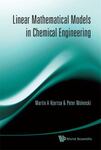
Linear Mathematical Models in Chemical Engineering
2010
Martin A. HjortsoUnderstanding the mathematical modeling of chemical processes is fundamental to The successful career of a researcher in chemical engineering. This book reviews, introduces, and develops the mathematics that is most frequently encountered in sophisticated chemical engineering models. The result of a collaboration between a chemical engineer and a mathematician, both of whom have taught classes on modeling and applied mathematics, The book provides a rigorous and in-depth coverage of chemical engineering model formulation and analysis as well as a text which can serve as an excellent introduction to linear mathematics for engineering students. There is a clear focus in the choice of material, worked examples, and exercises that make it unusually accessible to The target audience. The book places a heavy emphasis on applications to motivate the theory, but simultaneously maintains a high standard of rigor to add mathematical depth and understanding.
-
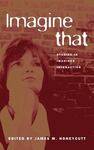
Imagine That: Studies in Imagined Interactions
2010
James M. HoneycuttImagined interactions (IIs) are a type of daydreaming in which individuals think about conversation in their minds. The first book on imagined interactions published by Hampton Press received a Distinguished Book Award from the National Communication Association. This volume reports a number of fascinating studies on IIs. Chapter 1 reviews the association between ruminating about conflict and relationship happiness, personality, and emotions. Chapter 2 examines topics of conflict and physical violence over a 4-month time period. The third chapter examines physiology and road rage as well as individuals imagining discussing pleasing and displeasing topics followed by an actual discussion of these topics with their partner while blood pressure and heart-rate variability fluctuate.
Chapter 4 examines the role of IIs in bereavement, and chapter 5 examines similarities and differences involving characteristics of IIs compared with the concept of Interpersonal Christian Prayer (ICP). Chapter 7 examines the role of IIs in online communication including emailing and instant messaging. Chapter 8 examines college students IIs with parents about money and credit card debt, and the following chapter reports on women who have had plastic surgery as they report on their IIs with family members and people they work with before and after their treatment. Chapter 10 examines discrepancy in IIs and symbolic convergence theory in which individuals in small groups often engage in fantasies as part of group identification. The concluding chapter examines dialogue theory in terms of individuals shared understanding. -
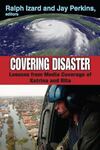
Covering Disaster: Lessons from Media Coverage of Katrina and Rita
2010
Ralph S. Izard and Ralph LardIn 2005, journalists faced enormous challenges while covering hurricanes Katrina and Rita along America's Gulf Coast. They struggled to find ways to communicate, move from one place to another, and find reputable information. They witnessed complete chaos, observed human suffering, and were outraged with delayed or ineffective rescue mechanisms. Not only did journalists face these normal problems of crises, since many themselves were among the victims, they were forced to do their jobs under circumstances that seemed impossible.
The contributors to Covering Disaster study personal and professional coping mechanisms and lessons that may be learned from media disaster coverage. During Katrina and Rita, journalists responded largely by redefining traditional ideals of fairness, balance, and objectivity and by adopting an emotionally driven and somewhat more subjective reporting style. In this way, they rediscovered and emphasized journalistic purposes and techniques that have long been the hallmarks of greatness. Their work during those months of destruction and pain was applauded by their readers and viewers because it was useful, critical of officials who were not doing their jobs, sought support for those who were suffering, and took a position of public leadership.
Now that the winds have died down, flood waters have receded, and rebuilding has begun, the brand of publicoriented journalism found in the midst of the storms must not be forgotten.
-

Hillary Clinton's Race for the White House: Gender Politics and the Media on the Campaign Trail
2010
Regina G. LawrenceSenator Hillary Clinton won 18 million votes in 2008 - nearly twice that of any presidential nominee in recent history - yet she failed to secure the Democratic nomination. In this compelling look at Clinton's historic candidacy, Regina Lawrence and Melody Rose explore how she came so close to breaking the ultimate glass ceiling in US politics, why she fell short, and what her experience portends for future female candidates in the media-saturated game of presidential politics. The result is more than just a postmortem of the Clinton campaign. Lawrence and Rose craft a sophisticated argument about the complex mix of gender stereotypes, media routines, and the particulars of individual character and electoral context that will shape the prospects of any woman who competes in the presidential arena. A compelling look at how Hillary Clinton came so close to breaking the ultimate glass ceiling in US politics, why she fell short, and what her experience portends for future female candidates in the media-saturated game of presidential politics.
-
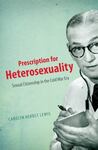
Prescription for Heterosexuality: Sexual Citizenship in the Cold War Era
2010
Carolyn Herbst LewisIn this lively and engaging work, Carolyn Lewis explores how medical practitioners, especially family physicians, situated themselves as the guardians of Americans' sexual well-being during the early years of the Cold War. She argues that many doctors viewed their patients' sexual habits as more than an issue of personal health. They believed that a satisfying sexual relationship between heterosexual couples with very specific attributes and boundaries was the foundation of a successful marriage, a fundamental source of happiness in the American family, and a crucial building block of a secure nation.
Drawing on hundreds of articles and editorials in medical journals as well as other popular and professional literature, Lewis traces how medical professionals defined and reinforced heterosexuality in the mid-twentieth century, giving certain heterosexual desires and acts a veritable stamp of approval while labeling others as unhealthy or deviant. Lewis links their prescriptive treatment to Cold War anxieties about sexual norms, gender roles, and national security. Doctors of the time, Lewis argues, believed that "unhealthy" sexual acts, from same-sex desires to female-dominant acts, could cause personal and marital disaster; in short, says Lewis, they were "un-American." -
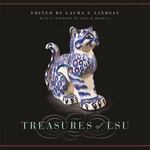
Treasures of LSU
2010
Laura F. LindsayIn celebration of Louisiana State University's sesquicentennial, Treasures of LSU trumpets the numerous and diverse riches found throughout the Baton Rouge campus and beyond. The 101 distinguished artworks, architectural gems, research collections, and scientific and cultural artifacts highlighted here represent only a small fraction of the material resources that surround and engage LSU faculty, staff, and students on a daily basis. As LSU chancellor emeritus Paul W. Murrill declares in his foreword, "All reflect expressions of superb quality. All encourage, in one way or another, the human spirit to soar."
Some of these treasures act as artistic backdrops to everyday campus life. In Unity Ascending, the striking Frank Hayden sculpture, greets all who enter the LSU Student Union. Vibrant Depression-era murals decorate the corridors of Allen Hall. Other treasures reside in out-of-the-way places. The Department of Geology and Geophysics houses the Henry V. Howe Type Collection of shelled microorganisms -- tiny, beautifully varied fossils that frequently aid geologists in determining the ages of rocks and features of ancient environments. The LSU Museum of Natural Science, in Foster Hall, holds one of the largest and most prestigious research collections of bird specimens in the world.
An LSU cadet uniform and a hand-spun Acadian quilt from the LSU Textile & Costume Museum; an enchanting silky-camellia specimen from the collections of the LSU Herbarium, founded in 1869; pottery by Walter Anderson and portraits by William Hogarth and Joshua Reynolds from the LSU Museum of Art -- all showcase the immense variety of LSU's assets. Other featured treasures include a historic dogtrot house at the LSU Rural Life Museum, John James Audubon's double elephant folio Birds of America from the E. A. McIlhenny Natural History Collection at Hill Memorial Library, and cherished campus landmarks like the Indian Mounds, the French House, and Mike the Tiger's habitat.
Full-page color photographs set off the treasures to stunning effect. Interpretive essays by LSU faculty, staff, and students explain the origins, history, and sometimes myths surrounding each item. Published by LSU Press during its seventy-fifth year of operation, Treasures of LSU is itself a treasure that inspires pleasure and amazement in discovering the wealth and diversity of LSU's resources and affirms the university's numerous cultural contributions to the world community. -
Plato: A Transitional Reader
2010
Wilfred MajorPlato was born c. 427 B.C. in Athens, Greece, to an aristocratic family very much involved in political government. Pericles, famous ruler of Athens during its golden age, was Plato's stepfather. Plato was well educated and studied under Socrates, with whom he developed a close friendship. When Socrates was publically executed in 399 B.C., Plato finally distanced himself from a career in Athenian politics, instead becoming one of the greatest philosophers of Western civilization. Plato extended Socrates's inquiries to his students, one of the most famous being Aristotle.
Plato's The Republic is an enduring work, discussing justice, the importance of education, and the qualities needed for rulers to succeed. Plato felt governors must be philosophers so they may govern wisely and effectively. Plato founded the Academy, an educational institution dedicated to pursuing philosophic truth. The Academy lasted well into the 6th century A.D., and is the model for all western universities. Its formation is along the lines Plato laid out in The Republic.
-

Wartime Dissent in America: A History and Anthology
2010
Robert MannThrough the speeches, essays and interviews of some of the most compelling individuals in American history who stood against the key conflicts of their lifetimes, this book gives remarkable insight into wartime dissent in the U.S. from the revolutionary war to the war on terror.
-
Over Ten Million Served: Gendered Service in Language and Literature Workplaces
2010
Michelle Annette MasséAll tenured and tenure-track faculy know the trinity of promotion and tenure criteria: research, teaching, and service. While teaching and research are relatively well defined areas of institutional focus and evaluation, service work is rarely tabulated or analyzed as a key aspect of higher education's political economy. Instead, service, silent and invisible, coexists with the formal "official" economy of many institutions, just as women's unrecognized domestic labor props up the formal, official economies of countries the world over. Over Ten Million Served explores what academic service is and investigates why this labor is often not acknowledged as "labor" by administrators or even by faculty themselves, but is instead relegated to a gendered form of institutional caregiving. By analyzing the actual labor of service, particularly for women and racial, ethnic, and sexual minorities, contributors expose the hidden economy of institutional service, challenging the feminization of service labor in the academy for both female and male academic laborers.
-
The Agile Librarian's Guide to Thriving in Any Institution
2010
Michelynn McKnightAgile librarians love their work and are appreciated for it. They have expertise in the practice of their profession and in the business of gaining and maintaining influence, as well as in effective marketing and public relations. This useful handbook describes and illustrates proven methods to get your library and information services the attention and support they deserve. Discover what your parent organization needs and values most. Delight your clients, your boss and non-librarian decision makers. Build a credible image and strengthen positive communication. Gather, analyze, and use valid evidence to support decisions. Keep your career green, growing and agile!
Agile librarians love their work and are appreciated for it. They have expertise in the practice of their profession and in the business of gaining and maintaining influence, as well as in effective marketing and public relations. This useful handbook describes and illustrates proven methods to get your library and information services the attention and support they deserve. Discover what your parent organization needs and values most. Delight your clients, your boss and non-librarian decision makers. Build a credible image and strengthen positive communication. Gather, analyze, and use valid evidence to support decisions. Keep your career green, growing and agile! -
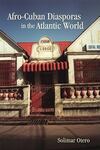
Afro-Cuban Diasporas in the Atlantic World
2010
Solimar OteroAfro-Cuban Diasporas in the Atlantic World explores how Yoruba and Afro-Cuban communities moved across the Atlantic between the Americas and Africa in successive waves in the nineteenth century. In Havana, Yoruba slaves from Lagos banded together to buy their freedom and sail home to Nigeria. Once in Lagos, this Cuban repatriate community became known as the Aguda. This community built their own neighborhood that celebrated their Afrolatino heritage. For these Yoruba and Afro-Cuban diasporic populations, nostalgic constructions of family and community play the role of narrating and locating a longed-for home. By providing a link between the workings of nostalgia and the construction of home, this volume re-theorizes cultural imaginaries as a source for diasporic community reinvention. Through ethnographic fieldwork and research in folkloristics, Otero reveals that the Aguda identify strongly with their Afro-Cuban roots in contemporary times. Their fluid identity moves from Yoruba to Cuban, and back again, in a manner that illustrates the truly cyclical nature of transnational Atlantic community affiliation. Solimar Otero is Associate Professor of English and a folklorist at Louisiana State University. Her research centers on gender, sexuality, Afro-Caribbean spirituality, and Yoruba traditional religion in folklore, literature and ethnography. Dr. Otero is the recipient of a Ruth Landes Memorial Research Fund grant (2013), a fellowship at the Harvard Divinity School's Women's Studies in Religion Program (2009 to 2010), and a Fulbright award (2001).
-

Fathers on the Frontier: French Missionaries and the Roman Catholic Priesthood in the United States, 1789-1870
2010
Michael PasquierIn the late eighteenth century, French emigre priests fled the religious turmoil of the French Revolution and found themselves leading a new wave of Roman Catholic missionaries in the United States. Fathers on the Frontier explores the diverse ways these missionary priests guided thedevelopment of the early American church in Maryland, Kentucky, Louisiana, and other pockets of Catholic settlement throughout much of the trans-Appalachian West. Over the course of their evangelistic endeavor, this relatively small group of priests introduced Gallican, ultramontane, and missionaryprinciples to a nascent institutional church prior to the immigration of millions of European Catholics in the nineteenth century.As author Michael Pasquier shows, this transformation of American Catholicism did not come easily. Several generations of French priests struggled to reconcile their romantic expectations of missionary life with their actual experiences as servants of a foreign church scattered throughout afrontier region with limited access to friends and family members still in France. As they became more accustomed to the lifeways of the American South and West, French missionaries expressed anxiety about apparent discrepancies between how they were taught to practice the priesthood in Frenchseminaries and what the Holy See expected them to achieve as representatives of a universal missionary church.At no point did French missionaries engage more directly in distinctively American affairs than in the religious debates surrounding slavery, secession, and civil war. These issues, Pasquier argues, compelled even the most politically aloof missionaries to step out of the shadow of Rome and staketheir church on the side of the Confederacy. In so doing, they set in motion a strain of Catholicism more amenable to Southern concepts of social conservatism, paternalism, and white supremacy, and strikingly different from the liberal, progressive strain that historians have usually highlighted. Focusing on the collective thoughts, feelings, and actions of priests who found themselves caught between the formal canonical standards of the church and the informal experiences of missionaries in American culture, Fathers on the Frontier illuminates the historical intersection of American, French, and Roman interests in the United States.
-
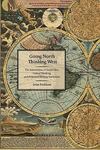
Going North, Thinking West: The Intersections of Social Class, Critical Thinking, and Politicized Writing Instruction
2010
Irvin PeckhamA long-time writing program administrator and well-respected iconoclast, Irvin Peckham is strongly identified with progressive ideologies in education. However, in Going North Thinking West , Peckham mounts a serious critique of what is called critical pedagogy--primarily a project of the academic left--in spite of his own sympathies there. College composition is fundamentally a middle-class enterprise, and is conducted by middle-class professionals, while student demographics show increasing presence of the working class. In spite of best intentions to ameliorate inequitable social class relationships, says Peckham, critical pedagogies can actually contribute to reproducing those relationships in traditional forms--not only perpetuating social inequities, but pushing working class students toward self-alienation, as well. Peckham argues for more clarity on the history of critical thinking, social class structures and teacher identity (especially as these are theorized by Pierre Bourdieu), while he undertakes a critical inquiry of the teaching practices with which even he identifies. Going North Thinking West focuses especially on writing teachers who claim a necessary linkage between critical thinking and writing skills; these would include both teachers who promote the fairly a-political position that argumentation is the obvious and necessary form of academic discourse, and more controversial teachers who advocate turning a classroom into a productive site of social transformation. Ultimately, Peckham argues for a rereading of Freire (an icon of transformational pedagogy), and for a collaborative investigation of students' worlds as the first step in a successful writing pedagogy. It is an argument for a pedagogy based on service to students rather than on transforming them.
-
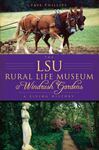
The LSU Rural Life Museum & Windrush Gardens: A Living History
2010
Faye PhillipsIn 1861, Louisiana settler William S. Pike established an incredible five-hundred-acre plantation seven miles from the heart of present-day Baton Rouge. His progeny continued to cherish the land for generations, all while pursuing unique and active lives. William Stephen Pike Burden Jr. became an amateur magician, and Ollie Brice Steele Burden, inspired by the formal gardens of Europe, designed Windrush Gardens. Today, the land is home to Louisiana State University's Rural Life Museum and houses rare collections of Louisiana folk life and working plantation materials. In this comprehensive history of LSU's beloved landmark, archivist Faye Phillips brings to life the hardships and toils, vision and determination of families in eighteenth- and nineteenth-century Louisiana.
-

Nonlinear Dynamics with Polymers: Fundamentals, Methods and Applications
2010
John Anthony PojmanClosing a gap in the literature, this is the first comprehensive handbook on this modern and important polymer topic.
Edited by highly experienced and top scientists in the field, this ready reference covers all aspects, including material science, biopolymers, gels, phase separating systems, frontal polymerization and much more.
The introductory chapter offers the perfect starting point for the non-expert. -

The Origins of Responsibility
2010
François RaffoulFrançois Raffoul approaches the concept of responsibility in a manner that is distinct from its traditional interpretation as accountability of the wilful subject. Exploring responsibility in the works of Nietzsche, Sartre, Levinas, Heidegger, and Derrida, Raffoul identifies decisive moments in the development of the concept, retrieves its origins, and explores new reflections on it. For Raffoul, responsibility is less about a sovereign subject establishing a sphere of power and control than about exposure to an event that does not come from us and yet calls to us. These original and thoughtful investigations of the post-metaphysical senses of responsibility chart new directions for ethics in the continental tradition.