

The LSU Scholarly Repository’s faculty-published books list serves as a permanent digital record of monographs authored or edited by LSU’s faculty. By centralizing these works, the LSU Libraries provide a testament to the university’s enduring commitment to research, creativity, and the advancement of knowledge.
If you are an LSU faculty member with a recently published monograph that is not contained in this list, please e-mail the institutional repository librarian at [email protected].









-
African American Foreign Correspondents: A History
2013
Jinx Coleman BroussardThough African Americans have served as foreign reporters for almost two centuries, their work remains virtually unstudied. In this seminal volume, Jinx Coleman Broussard traces the history of black participation in international newsgathering. Beginning in the mid-1800s with Frederick Douglass and Mary Ann Shadd Cary?the first black woman to edit a North American newspaper?African American Foreign Correspondents highlights the remarkable individuals and publications that brought an often-overlooked black perspective to world reporting. Broussard focuses on correspondents from 1840 to modern day, including reporters such as William Worthy Jr., who helped transform the role of modern foreign correspondence by gaining the right for journalists to report from anywhere in the world unimpeded; Leon Dash, a professor of journalism and African American studies at the University of Illinois at Urbana-Champaign who reported from Africa for the Washington Post in the 1970s and 1980s; and Howard French, a professor in Columbia University's journalism school and a globetrotting foreign correspondent.
African American Foreign Correspondents provides insight into how and why African Americans reported the experiences of blacks worldwide. In many ways, black correspondents upheld a tradition of filing objective stories on world events, yet some African American journalists in the mainstream media, like their predecessors in the black press, had a different mission and perspective. They adhered primarily to a civil rights agenda, grounded in advocacy, protest, and pride. Accordingly, some of these correspondents?not all of them professional journalists?worked to spur social reform in the United States and force policy changes that would eliminate oppression globally. Giving visibility and voice to the marginalized, correspondents championed an image of people of color that combatted the negative and racially construed stereotypes common in the American media.
By examining how and why blacks reported information and perspectives from abroad, African American Foreign Correspondents contributes to a broader conversation about navigating racial, societal, and global problems, some of which we continue to contend with today. -
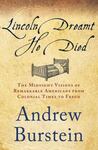
Lincoln Dreamt He Died: The Midnight Visions of Remarkable Americans from Colonial Times to Freud
2013
Andrew BursteinBefore Sigmund Freud made dreams the cornerstone of understanding an individual's inner life, Americans shared their dreams unabashedly with one another through letters, diaries, and casual conversation. In this innovative new book, highly regarded historian Andrew Burstein goes back for the first time to discover what we can learn about the lives and emotions of Americans, from colonial times to the beginning of the modern age. Through a thorough study of dreams recorded by iconic figures such as John and Abigail Adams, Thomas Jefferson, and Abraham Lincoln, as well as everyday men and women, we glimpse the emotions of earlier generations and understand how those feelings shaped their lives and careers, and thus gain a fuller multi-dimensional sense of our own past. No one has ever looked at the building blocks of the American identity in this way, and Burstein reveals important clues and landmarks that show the origins of the ideas and values that remain central to who we are today.
-
Eating Disorders and Obesity: A Counselor's Guide to Prevention and Treatment
2013
Laura H. ChoateRecent years in North America have seen a rapid development in the area of crime analysis and mapping using Geographic Information Systems (GIS) technology.
In 1996, the US National Institute of Justice (NIJ) established the crime mapping research center (CMRC), to promote research, evaluation, development, and dissemination of GIS technology. The long-term goal is to develop a fully functional Crime Analysis System (CAS) with standardized data collection and reporting mechanisms, tools for spatial and temporal analysis, visualization of data and much more. Among the drawbacks of current crime analysis systems is their lack of tools for spatial analysis.
For this reason, spatial analysts should research which current analysis techniques (or variations of such techniques) that have been already successfully applied to other areas (e.g., epidemiology, location-allocation analysis, etc.) can also be employed to the spatial analysis of crime data. This book presents a few of those cases. -
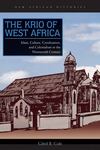
The Krio of West Africa: Islam, Culture, Creolization, and Colonialism in the Nineteenth Century
2013
Gibril Raschid ColeSierra Leone's unique history, especially in the development and consolidation of British colonialism in West Africa, has made it an important site of historical investigation since the 1950s. Much of the scholarship produced in subsequent decades has focused on the "Krio," descendants of freed slaves from the West Indies, North America, England, and other areas of West Africa, who settled Freetown, beginning in the late eighteenth century. Two foundational and enduring assumptions have characterized this historiography: the concepts of "Creole" and "Krio" are virtually interchangeable; and the community to which these terms apply was and is largely self-contained, Christian, and English in worldview.
In a bold challenge to the long-standing historiography on Sierra Leone, Gibril Cole carefully disentangles "Krio" from "Creole," revealing the diversity and permeability of a community that included many who, in fact, were not Christian. In Cole's persuasive and engaging analysis, Muslim settlers take center stage as critical actors in the dynamic growth of Freetown's Krio society.
The Krio of West Africa represents the results of some of the first sustained historical research to be undertaken since the end of Sierra Leone's brutal civil war. It speaks clearly and powerfully not only to those with an interest in the specific history of Sierra Leone, but to histories of Islam in West Africa, the British empire, the Black Atlantic, the Yoruban diaspora, and the slave trade and its aftermath. -
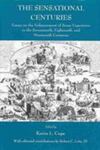
The Sensational Centuries: Essays on the Enhancement of Sense Experience in the Seventeenth, Eighteenth, and Nineteenth Centuries
2013
Kevin Lee CopeThe long period of “enlightenment” that extended from the rise of organised science to the emergence of Gilbert and Sullivan operas lauded reason and commended reflection but depended on sensation. A remarkably broad range of intellectual and cultural activity, whether the critical philosophy of John Locke or the rapturous poetry of John Keats, genuflected to the tame abstraction “experience” but gave full credit to raw sense for the sustaining of art, writing, and thought.
Universally invoked as everything from evidence to inspiration, “sensation” became the watchword of modernisation.The Sensational Centuriesoffers a portfolio of essays on the twists, turns, and metamorphoses of the idea and theme of “sensation” during the seventeenth, eighteenth, and nineteenth centuries, paying special attention to the evolution of sensationalism as an artistic and philosophical movement and examining the many curious and revealing cultural productions resulting from this intense interest in the varieties of sense.
Three generous sections include essays examining the literary and artistic genres arising from the cult of sense; the exploration of venues in which extreme, unusual, or offbeat sensations could occur; and the actions that result from the pursuit of sensational experience and the cultivation of a sensationalist art. The volume thus shows how the conversation about sensationalism continued loudly and volubly across diverse traditions and without regard for confining literary, cultural, religious, and artistic traditions—thereby defining an era. -
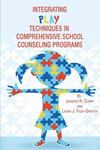
Integrating Play Techniques in Comprehensive School Counseling Programs
2013
Jennifer R. CurryPlay therapy interventions are critical elements of providing responsive services within the context of comprehensive school counseling programs. However, many school counselors are not trained in the use of play therapy techniques during their graduate training programs as Play Therapy is not a required course based on standards set by the Council for Accreditation of Counseling and Related Education Programs (CACREP) (2009). Indeed, while there are over 400 school counseling programs in the U. S., there are only 11 certified play therapy training centers. Even more critically, school counselors may not know which play therapy approaches and interventions are evidence-based for specific childhood concerns (e. g., selective mutism, social skills deficits, parent deployment). Play therapy is a structured, theoretically-based approach to counseling that builds on the normal communicative and learning processes of children as they may not have developed the complexities of language to accurately express their concerns (Carmichael, 2006; Gil, 1991; Landreth, 2002; OConnor & Schaefer, 1983). Further, children who are most in crisis may be the ones who need play concepts integrated in counseling; yet, many school counselors are unprepared to provide these vital resources. The focus of this book is on various play techniques and the application of various play therapy theories (i. e., Child Centered Play Therapy, Solution Focused Play Therapy, Cognitive Behavioral Play Therapy) within comprehensive school counseling programs, addressing various childhood concerns, prevention and intervention. Each chapter offers vignettes, a literature review of a specific childhood concern (e.g., homelessness, separation anxiety), pragmatic interventions for the school environment, and a case study to demonstrate application of techniques.
-
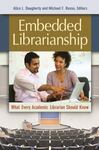
Embedded Librarianship: What Every Academic Librarian Should Know
2013
Alice L. Daugherty and Michael F. RussoIn the ongoing evolution of the academic library, embedded librarianship has become an important topic of debate across levels and departments. This book delves into the concept, examining everything from theory to best practices. Is the embedded librarian an equal partner in the course, or is the librarian perceived as a "value-added" extra? What is the place of technology in this effort? Is there a line librarians should not cross? Taking into account both theory and practice to discuss multiple facets of the subject, Embedded Librarianship: What Every Academic Librarian Should Know thoroughly examines these questions and more from the perspectives of experienced embedded librarian contributors who have worked in higher education settings. The chapters illuminate the benefits and challenges of embedding, explain the planning required to set up an embedded course, identify the different forms of embedding, and consider information literacy instruction in various contexts. Readers who will benefit from this work include not only academic librarians but any professor who wants their students to be able to do better research in their fields.
-
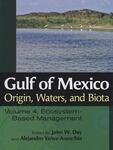
Gulf of Mexico: Origin, Waters, and Biota, Volume 4: Ecosystem-Based Management
2013
John W. DayThe fourth volume in the Harte Research Institute's landmark scientific series on the Gulf of Mexico provides a comprehensive study of ecosystem-based management, analyzing key coastal ecosystems in eleven Gulf Coast states from Florida to Quintana Roo and presenting case studies in which this integrated approach was tested in both the US and in Mexico. Two overview chapters cover related information on Cuba and on coastal zone management in Mexico. The comprehensive data on management policies and practices in this volume give researchers, policy makers, and other concerned parties the most up-to-date information available, supporting and informing initiatives to sustain healthy ecosystems so that they can, in turn, sustain human social and economic systems in this important transnational region. Combined with the second volume in this series, which examines the coastal and ocean-based economy of the Gulf region, "Ecosystem-Based Management" provides pivotal empirical information on how human activity can be managed in an environmentally sustainable way. This important research points the way to better stewardship of the Gulf's valuable natural resources, ensuring their availability for future generations.
-
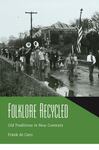
Folklore Recycled: Old Traditions in New Contexts
2013
Frank A. de CaroFolklore Recycled starts from the proposition that folklore--usually thought of in its historical social context as ""oral tradition""--is easily appropriated and recycled into other contexts. That is, writers may use folklore in their fiction or poetry, taking plots, as an example, from a folktale. Visual artists may concentrate on depicting folk figures or events, like a ritual or a ceremony. Tourism officials may promote a place through advertising its traditional ways. Folklore may play a role in intellectual conceptualizations, as when nationalists use folklore to promote symbolic unity.
Folklore Recycled discusses the larger issue of folklore being recycled into non-folk contexts, and proceeds to look at a number of instances of repurposing. Colson Whitehead's novel John Henry Days is a literary text that recycles folklore but does so in a manner which examines a number of other uses of the American folk figure John Henry. The nineteenth-century members of the Louisiana branch of the American Folklore Society and the author Lyle Saxon in the twentieth century used African American folklore to establish personal connections to the world of the southern plantation and buttress their own social status. The writer Lafcadio Hearn wrote about folklore to strengthen his insider credentials wherever he lived. Photographers in Louisiana leaned on folklife to solidify local identity and to promote government programs and industry. Promoters of ""unorthodox"" theories about history have used folklore as historical document. Americans in Mexico took an interest in folklore for acculturation, for tourism promotion, for interior decoration, and for political ends. All of the examples throughout the book demonstrate the durability and continued relevance of folklore in every context it appears. -
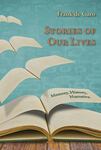
Stories of Our Lives: Memory, History, Narrative
2013
Frank A. de CaroIn Stories of Our Lives Frank de Caro demonstrates the value of personal narratives in enlightening our lives and our world. We all live with legends, family sagas, and anecdotes that shape our selves and give meaning to our recollections. Featuring an array of colorful stories from de Caro's personal life and years of field research as a folklorist, the book is part memoir and part exploration of how the stories we tell, listen to, and learn play an integral role in shaping our sense of self. De Caro's narrative includes stories within the story: among them a near-mythic capture of his golden-haired grandmother by Plains Indians, a quintessential Italian rags-to-riches grandfather, and his own experiences growing up in culturally rich 1950s New York City, living in India amid the fading glories of a former princely state, conducting field research on Day of the Dead altars in Mexico, and coming home to a battered New Orleans after Hurricane Katrina. Stories of Our Lives shows that our lives are interesting, and that the stories we tell--however particular to our own circumstances or trivial they may seem to others--reveal something about ourselves, our societies, our cultures, and our larger human existence.
-
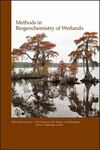
Methods in Biogeochemistry of Wetlands
2013
R. D. DeLauneWetlands occur at the interface of upland and aquatic ecosystems, making them unique environments that are vital to ecosystem health. But wetlands are also challenging to assess and understand. Wetland researchers have developed specialized analytical methods and sampling techniques that are now assembled for the first time in one volume. More than 100 experts provide key methods for sampling, quantifying, and characterizing wetlands, including wetland soils, plant communities and processes, nutrients, greenhouse gas fluxes,redox-active elements, toxins, transport processes, wetland water budgets,and more.
-
The Best American Short Plays 2011-2012
2013
William W. DemastesDraws from works produced by some of America's finest theater companies in an effort to capture the wide range of styles, topics, and regional tastes that typifies American theater.
-
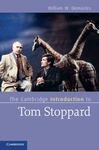
The Cambridge Introduction to Tom Stoppard
2013
William W. DemastesTom Stoppard is widely considered to be one of the most important dramatists of contemporary theatre. In this Introduction, William Demastes provides an accessible overview of Stoppard's life and work, exploring all the complexity and variety that makes his drama so unique. Illustrated with images from a diverse range of Stoppard productions, the book provides clear evaluations of his major works, including Rosencrantz and Guildenstern are Dead, Travesties, Arcadia and The Coast of Utopia, to provide the most up-to-date assessment available. Detailed chapters situate each play in the context of its sources, which include Shakespeare and contemporary existential thought, espionage, quantum physics, chaos theory, romanticism, landscape design, nineteenth-century European intellectual thought and European totalitarianism. The book also includes a section on Stoppard's Academy Award-winning film Shakespeare in Love.
-
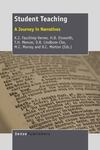
Student Teaching: A Journey in Narratives
2013
Kenneth James Fasching-VarnerJoin nine pre-service teachers as they share their experiences, challenges, and victories through a series of powerful narratives. Committed to making the process more transparent for those embarking on a similar journey, the chapter authors share honest, personal, and heartfelt viewpoints about what it means to become a teacher. The nine pre-service teachers in this volume all participated in a yearlong student teaching in the renowned Elementary Holmes Master of Arts in Teaching program at Louisiana State University.
-
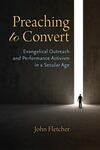
Preaching to Convert: Evangelical Outreach and Performance Activism in a Secular Age
2013
John FletcherPreaching to Convert offers an intriguing new perspective on the outreach strategies of U.S. evangelicals, framing them as examples of activist performance, broadly defined as acts performed before an audience in the hopes of changing hearts and minds. Most writing about activist performance has focused on left-progressive causes, events, and actors. Preaching to Convert argues against such a constricted view of activism and for a more nuanced understanding of U.S. evangelicalism as a movement defined by its desire to win converts and spread the gospel.
The book positions evangelicals as a diverse, complicated group confronting the loss of conservative Christianity's default status in 21st-century U.S. culture. In the face of an increasingly secular age, evangelicals have been reassessing models of outreach. In acts like handing out Bible tracts to strangers on the street or going door-to-door with a Bible in hand, in elaborately staged horror-themed morality plays or multimillion-dollar creationist discovery centers, in megachurch services beamed to dozens of satellite campuses, and in controversial "ex-gay" ministries striving to return gays and lesbians to the straight and narrow, evangelicals are redefining what it means to be deeply committed in a pluralist world. The book's engaging style and careful argumentation make it accessible and appealing to scholars and students across a range of fields. -
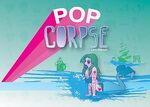
Pop Corpse
2013
Lara GlenumPoetry. Drama. "Father lend me your megabone / & I'll lend u my shotgun mouth". A radiant brew of emoticon opera, fairytale fan-fiction, and chat-room flame war, POP CORPSE! follows a heroine mermaid on her devoutly disarming search for "realness." Along the way, Glenum dismantles pieties of both the left and the right, proposing new models of configuring text, voice, body and species-hood for those who swim in the increasingly fetid waters of the 21st century.
-
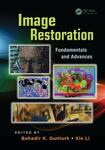
Image Restoration: Fundamentals and Advances
2013
Bahadir Kursat GunturkImage Restoration: Fundamentals and Advances responds to the need to update most existing references on the subject, many of which were published decades ago. Providing a broad overview of image restoration, this book explores breakthroughs in related algorithm development and their role in supporting real-world applications associated with various scientific and engineering fields. These include astronomical imaging, photo editing, and medical imaging, to name just a few. The book examines how such advances can also lead to novel insights into the fundamental properties of image sources.
Addressing the many advances in imaging, computing, and communications technologies, this reference strikes just the right balance of coverage between core fundamental principles and the latest developments in this area. Its content was designed based on the idea that the reproducibility of published works on algorithms makes it easier for researchers to build on each other's work, which often benefits the vitality of the technical community as a whole. For that reason, this book is as experimentally reproducible as possible.
Topics covered include:
Image denoising and deblurring Different image restoration methods and recent advances such as nonlocality and sparsity Blind restoration under space-varying blur Super-resolution restoration Learning-based methods Multi-spectral and color image restoration New possibilities using hybrid imaging systems
Many existing references are scattered throughout the literature, and there is a significant gap between the cutting edge in image restoration and what we can learn from standard image processing textbooks. To fill that need but avoid a rehash of the many fine existing books on this subject, this reference focuses on algorithms rather than theories or applications. Giving readers access to a large amount of downloadable source code, the book illustrates fundamental techniques, key ideas developed over the years, and the state of the art in image restoration. It is a valuable resource for readers at all levels of understanding.
-
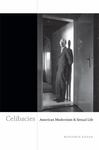
Celibacies: American Modernism and Sexual Life
2013
Benjamin KahanIn this innovative study, Benjamin Kahan traces the elusive history of modern celibacy. Arguing that celibacy is a distinct sexuality with its own practices and pleasures, Kahan shows it to be much more than the renunciation of sex or a cover for homosexuality. Celibacies focuses on a diverse group of authors, social activists, and artists, spanning from the suffragettes to Henry James, and from the Harlem Renaissance's Father Divine to Andy Warhol. This array of figures reveals the many varieties of celibacy that have until now escaped scholars of literary modernism and sexuality. Ultimately, this book wrests the discussion of celibacy and sexual restraint away from social and religious conservatism, resituating celibacy within a history of political protest and artistic experimentation. Celibacies offers an entirely new perspective on this little-understood sexual identity and initiates a profound reconsideration of the nature and constitution of sexuality.
-

The Offshore Drilling Industry and Rig Construction in the Gulf of Mexico
2013
Mark J. KaiserJackups, semisubmersibles and drillships are the marine vessels used to drill offshore wells and are referred to collectively as mobile offshore drilling units (MODUs). MODUs are supplied through newbuild construction and operate throughout the world in highly competitive regional markets. The Offshore Drilling Industry and Rig Construction Market in the Gulf of Mexico examines the global MODU service and construction industry and describes the economic impacts of rig construction in the United States.
The industrial organization and major players in the contract drilling and construction markets are described and categorized. Dayrates in the contract drilling market are evaluated and hypotheses regarding dayrate factors are tested. Models of contractor decision-making are developed, including a net-present value model of newbuilding investment and stacking decisions, and market capitalization models are derived. Jackup construction shipyards and processes are reviewed along with estimates of labor, equipment, and material cost in U.S. construction. Derivation of newbuild and replacement cost functions completes the treatise.
The comprehensive and authoritative coverage of The Offshore Drilling Industry and Rig Construction Market in the Gulf of Mexico makes it an ideal reference for engineers, industry professionals, policy analysts, government regulators, academics and other readers wanting to learn more about this important and fascinating industry.
-
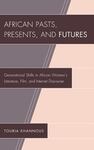
African Pasts, Presents, and Futures: Generational Shifts in African Women's Literature, Film, and Internet Discourse
2013
Touria KhannousAfrican Pasts, Presents, and Futures: Generational Shifts in African Women's Literature, Film, and Internet Discourse, by Touria Khannous, provides a history of African women's cultural production, as well as an alternative approach to the arguments that have traditionally dominated post-colonial studies in general, and African and gender studies in particular. It examines some of the more overarching questions that are prevalent in the works of African women authors, who position themselves within the contexts of Islam, feminism, nationalism, modernity, and global and postcolonial politics, thus engaging in the construction of socio-political platforms for reform in their home countries. The book explores different aspects of women's agency at the political, cultural, social, religious and aesthetic level, and highlights their civil society activism and push for legal reform. It also traces their opinions on a range of social and political questions and underscores fundamental shifts in their positions and concerns through the different generations.
-
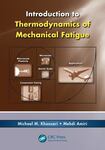
Introduction to Thermodynamics of Mechanical Fatigue
2013
Michael M. KhonsariFatigue is probabilistic in nature and involves a complex spectrum of loading history with variable amplitudes and frequencies. Yet most available fatigue failure prediction methods are empirical and concentrate on very specific types of loading. Taking a different approach, Introduction to Thermodynamics of Mechanical Fatigue examines the treatment of fatigue via the principles of thermodynamics. It starts from the premise that fatigue is a dissipative process and must obey the laws of thermodynamics. In general, it can be hypothesized that mechanical degradation is a consequence of irreversible thermodynamic processes. This suggests that entropy generation offers a natural measure of degradation.
-
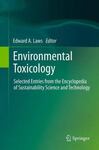
Environmental Toxicology: Selected Entries from the Encyclopedia of Sustainability Science and Technology
2013
Edward A. LawsEnvironmental Toxicology provides a detailed, comprehensive introduction to this key area of sustainability and public health research. The broad coverage includes sections on ecological risk assessment, monitoring, mechanisms, fate and transport, prevention, and correctives, as well as treatment of the health effects of solar radiation and toxicology in the ocean. The 23 state-of-the-art chapters provide a multi-disciplinary perspective on this vital area, which encompasses environmental science, biology, chemistry, and public health.
-
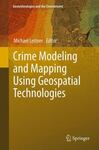
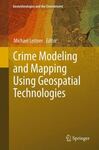
Crime Modeling and Mapping Using Geospatial Technologies
2013
Michael LeitnerRecent years in North America have seen a rapid development in the area of crime analysis and mapping using Geographic Information Systems (GIS) technology.
In 1996, the US National Institute of Justice (NIJ) established the crime mapping research center (CMRC), to promote research, evaluation, development, and dissemination of GIS technology. The long-term goal is to develop a fully functional Crime Analysis System (CAS) with standardized data collection and reporting mechanisms, tools for spatial and temporal analysis, visualization of data and much more. Among the drawbacks of current crime analysis systems is their lack of tools for spatial analysis.
For this reason, spatial analysts should research which current analysis techniques (or variations of such techniques) that have been already successfully applied to other areas (e.g., epidemiology, location-allocation analysis, etc.) can also be employed to the spatial analysis of crime data. This book presents a few of those cases. -
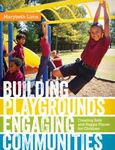
Building Playgrounds, Engaging Communities: Creating Safe and Happy Places for Children
2013
Marybeth LimaWe accomplish extraordinary things when we do ordinary things together. This heartfelt and hopeful conviction led LSU professor Marybeth Lima to begin the LSU Community Playground Project as a way to involve her students in the larger Baton Rouge community. Fifteen years and over seven hundred students later, Building Playgrounds, Engaging Communities tells the remarkable story of the Playground Project's ongoing partnership with area public schools to design and build safe, fun, accessible, kid-designed playgrounds.
Lima's experiences with the Playground Project range from outright failures to hard-won victories. Overcoming the challenges of working with scarce resources and persevering despite many setbacks, Lima and her students succeeded with hope, humor, and dedication.
Building Playgrounds, Engaging Communities emphasizes the major impact people have when they work together for the common good whether by building playgrounds, establishing neighborhood gardens, or participating in honest, respectful conversations. To this end, Lima provides an appendix with practical advice for local engagement. People wanting to make a difference in their communities can use this book as a road map; those active in long-term endeavors will draw on it for ideas and inspiration. -
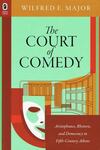
The Court of Comedy: Aristophanes, Rhetoric, and Democracy in Fifth-Century Athens
2013
Wilfred E. MajorThe Court of Comedy: Aristophanes, Rhetoric, and Democracy in Fifth-Century Athens, by Wilfred E. Major, analyzes how writers of comedy in Classical Greece satirized the emerging art of rhetoric and its role in political life. In the fifth century BCE, the development of rhetoric proceeded hand in hand with the growth of democracy both on Sicily and at Athens. In turn, comic playwrights in Athens, most notably Aristophanes, lampooned oratory as part of their commentary on the successes and failures of the young democracy. This innovative study is the first book to survey all the surviving comedy from the fifth century BCE on these important topics. The evidence reveals that Greek comedy provides a revealing commentary on the incipient craft of rhetoric before its formal conventions were stabilized. Furthermore, Aristophanes' depiction of rhetoric and of Athenian democratic institutions indicates that he fundamentally supports the Athenian democracy and not, as is often argued, oligarchic opposition to it. These conclusions confirm recent work that reinterprets the early development of rhetoric in Classical Greece and offer fresh perspectives on the debate over the role of comedy in early Greek democracy. Throughout, Major capitalizes on recent progress in understanding of the performance dynamics of Classical Greek theater.