The LSU Scholarly Repository’s faculty-published books list serves as a permanent digital record of monographs authored or edited by LSU’s faculty. By centralizing these works, the LSU Libraries provide a testament to the university’s enduring commitment to research, creativity, and the advancement of knowledge.
If you are an LSU faculty member with a recently published monograph that is not contained in this list, please e-mail the institutional repository librarian at [email protected].
-

Nanolithography: The Arts of Fabricating Nanoelectronic and Nanophotonic Devices and Systems
2014
Martin FeldmanIntegrated circuits, and devices fabricated using the techniques developed for integrated circuits, have steadily gotten smaller, more complex, and more powerful. The rate of shrinking is astonishing - some components are now just a few dozen atoms wide. This book attempts to answer the questions, "What comes next?" and "How do we get there?"
Nanolithography outlines the present state of the art in lithographic techniques, including optical projection in both deep and extreme ultraviolet, electron and ion beams, and imprinting. Special attention is paid to related issues, such as the resists used in lithography, the masks (or lack thereof), the metrology needed for nano-features, modeling, and the limitations caused by feature edge roughness. In addition emerging technologies are described, including the directed assembly of wafer features, nanostructures and devices, nano-photonics, and nano-fluidics.
This book is intended as a guide to the researcher new to this field, reading related journals or facing the complexities of a technical conference. Its goal is to give enough background information to enable such a researcher to understand, and appreciate, new developments in nanolithography, and to go on to make advances of his/her own. Outlines the current state of the art in alternative nanolithography technologies in order to cope with the future reduction in size of semiconductor chips to nanoscale dimensions Covers lithographic techniques, including optical projection, extreme ultraviolet (EUV), nanoimprint, electron beam and ion beam lithography Describes the emerging applications of nanolithography in nanoelectronics, nanophotonics and microfluidics -
Finding Italy: Travel, Nation and Colonization in Vergil's Aeneid
2014
Kristopher F. B. FletcherFinding Italy explores the journey of the Romans' ancestor Aeneas and his fellow Trojans from their old home, Troy, to their new country, Italy, narrated in Vergil's epic poem Aeneid . K. F. B. Fletcher argues that a main narrative theme is patriotism, specifically the problem of how one comes to love one's new country. The various directions Aeneas receives throughout the first half of the poem are meant to create this love, explaining both to Aeneas and to Vergil's readers how they should respond to the new, unified Italy synonymous with Rome. These directions come from the gods, or from people close to Aeneas who have divine connections, and they all serve to instill an emotional connection to the land, creating a mental image of Italy that tells him far more about his destination than merely its location, and ultimately making him fall in love with Italy enough to fight for it soon after his arrival. The poem thus dramatizes the birth of nationalism, as Italy is only a concept to Aeneas throughout his trip; these directions do not describe Italy as it is at the time of Aeneas' journey, but as an ideal to be realized by Aeneas and his descendants, reaching its final, perfect form under Augustus Caesar.
Finding Italy provides a very detailed reading of the directions Aeneas receives by situating them within their relevant contexts: ancient geography, Greek colonization narratives, prophecy, and ancient views of wandering. Vergil draws on all of these concepts to craft instructions that create in Aeneas an attachment to Italy before he ever arrives, a process that dramatizes a key emotional problem in the late first century BCE in the wake of the Social and Civil Wars: how to balance the love of one's modest birthplace with the love of Rome, the larger city that now encompasses it.
-
Encyclopedia of the Zombie: The Walking Dead in Popular Culture and Myth
2014
Anthony J. FonsecaA fascinating read for anyone from general readers to hardcore fans and scholars, this encyclopedia covers virtually every aspect of the zombie as cultural phenomenon, including film, literature, folklore, music, video games, and events.
The proliferation of zombie-related fiction, film, games, events, and other media in the last decade would seem to indicate that zombies are "the new vampires" in popular culture. The editors and contributors of Encyclopedia of the Zombie: The Walking Dead in Popular Culture and Myth took on the prodigious task of covering all aspects of the phenomenon, from the less-known historical and cultural origins of the zombie myth to the significant works of film and literature as well as video games in the modern day that feature the insatiable, relentless zombie character.
The encyclopedia examines a wide range of significant topics pertaining to zombies, such as zombies in the pulp magazines; the creation of the figure of the zuvembie to subvert decades of censorship by the Comics Code of Authority; Humans vs. Zombies, a popular zombie-themed game played on college campuses across the country; and annual Halloween zombie walks. Organized alphabetically to facilitate use of the encyclopedia as a research tool, it also includes entries on important scholarly works in the expanding field of zombie studies. -
Information Systems Outsourcing: Towards Sustainable Business Value
2014
Rudy HirschheimThis book attempts to synthesize research that contributes to a better understanding of how to reach sustainable business value through information systems (IS) outsourcing. Important topics in this realm are how IS outsourcing can contribute to innovation, how it can be dynamically governed, how to cope with its increasing complexity through multi-vendor arrangements, how service quality standards can be met, how corporate social responsibility can be upheld and how to cope with increasing demands of internationalization and new sourcing models, such as crowdsourcing and platform-based cooperation. These issues are viewed from either the client or vendor perspective, or both. The book should be of interest to all academics and students in the fields of Information Systems, Management and Organization as well as corporate executives and professionals who seek a more profound analysis and understanding of the underlying factors and mechanisms of outsourcing.
-

The Oxford History of the Novel in English: Volume 5: The American Novel to 1870
2014
J. Gerald KennedyThe American Revolution and the Civil War bracket roughly eight decades of formative change in a republic created in 1776 by a gesture that was both rhetorical and performative. The subsequent construction of U.S. national identity influenced virtually all art forms, especially prose fiction until internal conflict disrupted the project of nation-building. This volume reassesses, in an authoritative way, the principal forms and features of the emerging American novel. It will include chapters on: the beginnings of the novel in the US; the novel and nation-building; the publishing industry; leading novelists of Antebellum America; eminent early American novels; cultural influences on the novel; and subgenres within the novel form during this period. This book is the first of the three proposed US volumes that will make up Oxford's ambitious new eleven-volume literary resource, The Oxford History of the Novel in English (OHONE), a venture being commissioned and administered on both sides of the Atlantic.
-

Black and Brown Planets: The Politics of Race in Science Fiction
2014
Isiah Lavender IIIBlack and Brown Planets embarks on a timely exploration of the American obsession with color in its look at the sometimes-contrary intersections of politics and race in science fiction. The contributors, including De Witt D. Kilgore, Edward James, Lisa Yaszek, and Marleen S. Barr, among others, explore science fiction worlds of possibility (literature, television, and film), lifting blacks, Latin Americans, and indigenous peoples out from the background of this historically white genre.
This collection considers the role of race and ethnicity in our visions of the future. The first section emphasizes the political elements of black identity portrayed in science fiction from black America to the vast reaches of interstellar space framed by racial history. In the next section, analysis of indigenous science fiction addresses the effects of colonization, helps discard the emotional and psychological baggage carried from its impact, and recovers ancestral traditions in order to adapt in a post-Native-apocalyptic world. Likewise, this section explores the affinity between science fiction and subjectivity in Latin American cultures from the role of science and industrialization to the effects of being in and moving between two cultures. By infusing more color in this otherwise monochrome genre, Black and Brown Planets imagines alternate racial galaxies with viable political futures in which people of color determine human destiny. -
Self-Healing Composites: Shape Memory Polymer Based Structures
2014
Guoqiang LiIn this book, the self-healing of composite structures with shape memory polymer as either matrix or embedded suture is systematically discussed. Self-healing has been well known in biological systems for many years: a typical example is the self-healing of human skin. Whilst a minor wound can be self-closed by blood clotting, a deep and wide cut needs external help by suturing. Inspired by this observation, this book proposes a two-step close-then-heal (CTH) scheme for healing wide-opened cracks in composite structures-by constrained shape recovery first, followed by molecular healing. It is demonstrated that the CTH scheme can heal wide-opened structural cracks repeatedly, efficiently, timely, and molecularly. It is believed that self-healing represents the next-generation technology and will become an engineering reality in the near future.
The book consists of both fundamental background and practical skills for implementing the CTH scheme, with additional focus on understanding strain memory versus stress memory and healing efficiency evaluation under various fracture modes. Potential applications to civil engineering structures, including sealant for bridge decks and concrete pavements, and rutting resistant asphalt pavements, are also explored. This book will help readers to understand this emerging field, and to establish a framework for new innovation in this direction.
Key features:
explores potential applications of shape memory polymers in civil engineering structures, which is believed to be unique within the literature balanced testing and mathematical modeling, useful for both academic researchers and practitioners the self-healing scheme is based on physical change of polymers and is written in an easy to understand style for engineering professionals without a strong background in chemistry
-
Service-Leaning: Engineering in Your Community
2014
Marybeth LimaService-Learning: Engineering in Your Community, Second Edition, links design methodology and engineering analysis to the socially beneficial application of engineering principles. Authors Marybeth Lima and William C. Oakes emphasize the importance of reflection, teaming skills, project management, communications, and ethics, carefully considering the integral roles that they play in the process of engineering for the common good. New to this Edition:* Four new chapters:- Chapter 2: Best Practices in Engineering Service-Learning- Chapter 5: Ethics in Learning through Service- Chapter 6: Sustainable Citizens and Citizen Engineers- Chapter 12: International Service-Learning
-

Change and Conflict in the U.S. Army Chaplain Corps Since 1945
2014
Anne C. LovelandArmy chaplains have long played an integral part in America's armed forces. In addition
to conducting chapel activities on military installations and providing moral and spiritual
support on the battlefield, they conduct memorial services for fallen soldiers, minister
to survivors, offer counsel on everything from troubled marriages to military bureaucracy,
and serve as families' points of contact for wounded or deceased soldiers--all while
risking the dangers of combat alongside their troops. In this thoughtful study, Anne C.
Loveland examines the role of the army chaplain since World War II, revealing how the
corps has evolved in the wake of cultural and religious upheaval in American society and
momentous changes in U.S. strategic relations, warfare, and weaponry.From 1945 to the present, Loveland shows, army chaplains faced several crises that
reshaped their roles over time. She chronicles the chaplains' initiation of the Character
Guidance program as a remedy for the soaring rate of venereal disease among soldiers in
occupied Europe and Japan after World War II, as well as chaplains' response to the challenge
of increasing secularism and religious pluralism during the "culture wars" of the
Vietnam Era."Religious accommodation," evangelism and proselytizing, public prayer,
and "spiritual fitness"provoked heated controversy among chaplains as well as civilians in
the ensuing decades. Then, early in the twenty-first century, chaplains themselves experienced
two crisis situations: one the result of the Vietnam-era antichaplain critique, the
other a consequence of increasing religious pluralism, secularization, and sectarianism
within the Chaplain Corps, as well as in the army and the civilian religious community.
By focusing on army chaplains' evolving, sometimes conflict-ridden relations with
military leaders and soldiers on the one hand and the civilian religious community on the
other, Loveland reveals how religious trends over the past six decades have impacted the
corps and, in turn, helped shape American military culture. -
Out of Bounds: Racism and the Black Athlete
2014
Lori Latrice MartinThis collection of essays highlights the controversies surrounding racism in sports and African American athletes, examining the racial discrimination that exists in one of the most public arenas in the 21st century. Despite increasing diversity in the American population, race and racial bias continue to be significant issues in the United States. Sports--one of the most visible and important subsets of American culture--directly reflect our society's beliefs about race. This book examines racial controversy and conflict in various sports in the United States in both previous eras as well as the current "Age of Obama."The essays in the work explain how racial ideologies are created and recreated in all areas of public life, including the world of sports. The authors address a wide range of sports, including ones where racial minorities are in the numerical minority, such as hockey. Specific topics covered include the devaluation of black athletes, racism in Major League Baseball, and the treatment of black female athletes.
-
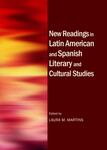
New Readings in Latin American and Spanish Literary and Cultural Studies
2014
Laura M. MartinsPresenting and interrogating a range of texts and discourses, this collection brings into focus a broad range of topics whose common denominator is the intersection between cultural productions and politics in different moments of the history of Latin America and Spain. From the struggles of class distinction, identity and community in 19th and 20th century and contemporary Latin America as explored in photography, literature and film, to how political and sexual transgressions from medieval times to the present are portrayed in Hispanic literature, and the ways that canonical and non-canonical texts in Spain have been defying hegemonic power relations in the 20th Century and beyond. This volume provides fresh approaches from well-established scholars, as well as from a new generation of researchers whose works enlighten the reader about the rich facets of such intersections. This publication also offers a background to pursue further research in these areas and to serve the general public interested in Latin American and Spanish literary and cultural studies, and those seeking a greater understanding of social and economic change in both Latin America and Spain: specifically, the constraints on state power in the neoliberal era; issues of inclusion and citizenship; the strategies used by texts to create subjects that are not bound to conventional identity formations; and the challenges and possibilities of subverting the gaze of the institutional spectator.
-
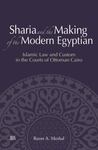
Sharia and the Making of the Modern Egyptian: Islamic Law and Custom in the Courts of Ottoman Cairo
2014
Reem A. MeshalIn this book, the author examines sijills, the official documents of the Ottoman Islamic courts, to understand how sharia law, society and the early-modern economy of sixteenth- and seventeenth-century Ottoman Cairo related to the practice of custom in determining rulings. In the sixteenth century, a new legal and cultural orthodoxy fostered the development of an early-modern Islam that broke new ground, giving rise to a new concept of the citizen and his role. Contrary to the prevailing scholarly view, this work adopts the position that local custom began to diminish and decline as a source of authority.
These issues resonate today, several centuries later, in the continuing discussions of individual rights in relation to Islamic law. -
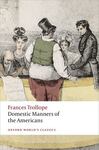
Domestic Manners of the Americans
2014
Elsie B. Michie"it appeared to me that the greatest and best feelings of the human heart were paralyzed by the relative positions of slave and owner"In Domestic Manners of the Americans Frances Trollope recounts her travels through America between 1827 and 1830, describing her voyage up the Mississippi from New Orleans, a two-year stay in Cincinnati, and a subsequent tour of Washington, Baltimore, Philadelphia, and New York. A transatlanticbest-seller on publication in 1832, its forthright criticisms of American manners encompassed spitting, religious extremism, ladies' dress, the relentless pursuit of money, and the unequal treatment of women, slaves, and Native Americans. Witty, satiric, and hugely entertaining, Trollope also had aserious purpose in warning her compatriots of the consequences of democratic freedoms at a time of great social change in England. Deploring slavery and the hypocrisy that sanctioned it, she fuelled abolitionist debate on both sides of the Atlantic and so impressed Mark Twain that fifty years later he considered her book to be the most accurate portrait of American life in the nineteenth century.
For over 100 years Oxford World's Classics has made available the widest range of literature from around the globe. Each affordable volume reflects Oxford's commitment to scholarship, providing the most accurate text plus a wealth of other valuable features, including expert introductions by leading authorities, helpful notes to clarify the text, up-to-date bibliographies for further study, and much more.
-

Oil and Water: Media Lessons from Hurricane Katrina and the Deepwater Horizon Disaster
2014
Andrea MillerAlong the Gulf Coast, history is often referenced as pre-Katrina or post-Katrina. However, the natural disaster that appalled the world in 2005 has been joined by another catastrophe, this one man-made--the greatest environmental and maritime accident of all time, the Deepwater Horizon Oil Spill. In less than five years, the Gulf Coast has experienced two colossal disasters, very different, yet very similar. And these two equally complex crises have resulted in a steep learning curve for all, but especially the journalists covering these enduring stories.
In "Oil and Water," the authors explore the media-fed experiences, the visuals and narratives associated with both disasters. Katrina journalists have reluctantly had to transform into oil spill journalists. The authors look at this process of growth from the viewpoints not only of the journalists, but also of the public and of the scientific community. Through a detailed analysis of the journalists' content, the authors tackle significant questions. This book assesses the quality of journalism and the effects that quality may have on the public. The authors argue that regardless of the type of journalism involved or the immensity of the events covered, successful reportage still depends on the fundamentals of journalism and the importance of following these tenets consistently in a crisis atmosphere, especially when confronted with enduring crises that are just years apart.
-
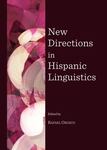
New Directions in Hispanic Linguistics
2014
Rafael OrozcoThis volume addresses some lacunae in Hispanic linguistic research by focusing on new scholarly directions, exploring understudied topics as well as speech communities, and presenting new takes on relevant linguistic and sociocultural issues. This publication answers questions which have emerged as a result of the rapid increase in Hispanic linguistic research since the latter part of the twentieth century or that have remained open in spite of it. With the rapid growth of Hispanic Linguistics during the 21st century, the topics included in this volume are representative of the breadth, vitality, and interdisciplinarity of contemporary linguistic scholarship. They also reflect that linguistics, in general, has become more methodologically sophisticated. This book is comprised of twelve chapters divided into three parts. Part I addresses language ideology and language contact issues that are embedded in important sociolinguistic and cultural topics chronologically spanning from the 16th century to the present. Although these issues take place in Spain, the United States, Turkey and Ecuador, they pertain ideologically to all corners of the Hispanic World and beyond. Part II is devoted to pragmatics and language variation with topics that transport us to Colombia, Mexico, Spain and Venezuela. The study of politeness strategies shows how Spanish speakers reduce social distance between interlocutors as they make conversation a pleasant and cooperative meeting place. Concurrently, sociolinguistic innovations reveal interesting parallels among several speech communities. Part III explores linguistic variation as it relates to theoretical, structural, and instructional issues. Although these topics are analyzed based mainly on linguistic usage in Bolivia, Colombia, the Dominican Republic, Ecuador, Panama, and Spain - as with the rest of this volume - their relevance reaches far beyond the confines of the Hispanic World. This book is unique in multiple ways and complements a number of existing publications.
-

Peace and Pedagogy Primer
2014
Molly QuinnWhat makes for peace as lived? What images of peace issue from examination of daily experience? What can be gleaned from reflection upon the topic for the meanings and makings of peace in our world? Considering that to work for peace, we must begin with ourselves and with our children, Molly Quinn addresses these questions through her own life and work. She does so with those who would, and do, teach children, and with the children they teach. The text is rooted in inquiry with aspiring elementary teachers through a university social studies course in New York City, where East Harlem first-graders engage peace curriculum, and in the South Bronx, where fourth-graders attempt to understand and respond to neighborhood violence. The author seeks to elucidate educational possibilities for dreaming peace anew, and passionately living and laboring, singularly and together, for its realization among us.
-
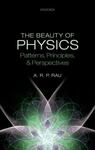
The Beauty of Physics: Patterns, Principles, and Perspectives
2014
A. Ravi P. RauThe beauty of physics lies in its coherence in terms of a few fundamental concepts and principles. Even physicists have occasion to marvel at the overarching reach of basic principles and their ability to account for features stretching from the microscopic sub-atomic world to the cosmologicalexpanses of the Universe. While mathematics is its natural language, physics is mostly about patterns, connections, and relations between objects and phenomena, and it is this aspect that is emphasized in this book.Since science tries to connect phenomena that at first sight appear widely different, while boiling them down to a small set of essential principles and laws, metaphor and analogy pervade our subject. Consider the pendulum, its swing from one extreme to the other often invoked in social or economic contexts. In molecular vibrations, such as in the CO2 molecule, the quantum motions of electrons and nuclei are metaphorically the pendulums. In electromagnetic radiation, including the visible light we observe, there are not even any concrete material particles, only electric and magnetic fields executing simple harmonic motion. But, to a physicist, they are all "just a pendulum".The selection of topics reflects the author's own four-decade career in research physics and his resultant perspective on the subject. While aimed primarily at physicists, including junior students, this book also addresses other readers who are willing to think with symbols and simple algebra in understanding the physical world around us. Each chapter, on themes such as dimensions, transformations, symmetries, or maps, begins with simple examples accessible to all while connecting them later to more sophisticated realizations in more advanced topics of physics.
-

Undergraduate Instrumental Analysis
2014
James W. RobinsonCrucial to research in molecular biology, medicine, geology, food science, materials science, and many other fields, analytical instrumentation is used by many scientists and engineers who are not chemists. Undergraduate Instrumental Analysis, Seventh Edition provides users of analytical instrumentation with an understanding of these instruments, covering all major fields of modern instrumentation. Following the tradition of earlier editions, this text is designed for teaching undergraduates and those with no analytical chemistry background how contemporary analytical instrumentation works, as well as its uses and limitations.
Each chapter provides a discussion of the fundamental principles underlying the techniques, descriptions of the instrumentation, and numerous applications. The chapters also contain updated bibliographies and problems, and most have suggested experiments appropriate to the techniques. This completely revised and updated edition covers subjects in more detail, such as a completely revised x-ray chapter, expanded coverage of electroanalytical techniques, and expansion of chromatography and mass spectrometry topics to reflect the predominance of these instruments in laboratories. This includes state-of-the-art sample introduction and mass analyzers, and the latest developments in UPLC and hyphenated techniques. The book also contains new graphics and addresses several new topics:Ion mobility spectrometry Time domain NMR (relaxometry) Electron spin resonance spectroscopy (ESR, EPR) Forensic science and bioanalytical applications Microcalorimetry and optical thermal instruments Laser-induced breakdown spectroscopy (LIBS)
This text uniquely combines instrumental analysis with organic spectral interpretation (IR, NMR, and MS). It provides detailed coverage of sampling, sample handling, sample storage, and sample preparation. In addition, the authors have included many instrument manufacturers' websites, which contain extensive resources.
-
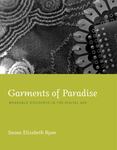
Garments of Paradise: Wearable Discourse in the Digital Age
2014
Susan Elizabeth RyanA historical and critical view of wearable technologies that considers them as acts of communication in a social landscape.
Wearable technology--whether a Walkman in the 1970s, an LED-illuminated gown in the 2000s, or Google Glass today--makes the wearer visible in a technologically literate environment. Twenty years ago, wearable technology reflected cultural preoccupations with cyborgs and augmented reality; today, it reflects our newer needs for mobility and connectedness. In this book, Susan Elizabeth Ryan examines wearable technology as an evolving set of ideas and their contexts, always with an eye on actual wearables--on clothing, dress, and the histories and social relations they represent. She proposes that wearable technologies comprise a pragmatics of enhanced communication in a social landscape. "Garments of paradise" is a reference to wearable technology's promise of physical and mental enhancements.
Ryan defines "dress acts"--hybrid acts of communication in which the behavior of wearing is bound up with the materiality of garments and devices--and focuses on the use of digital technology as part of such systems of meaning. She connects the ideas of dress and technology historically, in terms of major discourses of art and culture, and in terms of mass media and media culture, citing such thinkers as Giorgio Agamben, Manuel De Landa, and Gilles Deleuze and Félix Guattari. She examines the early history of wearable technology as it emerged in research labs; the impact of ubiquitous and affective approaches to computing; interaction design and the idea of wearable technology as a language of embodied technology; and the influence of open source ideology. Finally, she considers the future, as wearing technologies becomes an increasingly naturalized aspect of our social behavior.
-
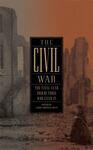
The Civil War: The Final Year Told by Those Who Lived It
2014
Aaron Charles Sheehan-DeanFeaturing hundreds of first-hand writings from the American Civil War, this final installment of the highly acclaimed four-volume series traces events from March 1864 to June 1865
After 150 years the Civil War still holds a central place in American history and self-understanding. It is our greatest national drama, at once heroic, tragic, and epic-our Iliad , but also our Bible, a story of sin and judgment, suffering and despair, death and resurrection in a "new birth of freedom." The Civil War- The Final Year brings together letters, diary entries, speeches, articles, messages, and poems to provide an incomparable literary portrait of a nation at war with itself, while illuminating the military and political events that brought the Union to final victory and slavery and secession to their ultimate destruction.
The final volume of this highly acclaimed four-volume series begins with the controversial Kilpatrick-Dahlgren raid on Richmond in March 1864 and ends with the proclamation of emancipation in Texas in June 1865. It collects 160 pieces by more than one hundred participants and observers, among them Abraham Lincoln, William T. Sherman, Ulysses S. Grant, Jefferson Davis, Robert E. Lee, Frederick Douglass, Harriet Ann Jacobs, Walt Whitman, Henry Adams, and Herman Melville, as well as Union officers Charles Harvey Brewster, James A. Connolly, and Stephen Minot Weld; Confederate diarists Catherine Edmondston, Kate Stone, and Judith W. McGuire; freed slaves Spottswood Rice, Garrison Frazier, and Frances Johnson; and Confederate soldiers J.F.J. Caldwell, Samuel T. Foster, and William Pegram. The selections include vivid and haunting firsthand accounts of battles and campaigns-the Wilderness, Spotsylvania, Cold Harbor, Atlanta, the Crater, Franklin, and Sherman's march through Georgia and the Carolinas-as well as of the Fort Pillow massacre; the struggle to survive inside Andersonville prison; the burning of Columbia and Richmond; the passage of the Thirteenth Amendment; the surrender at Appomattox; and Lincoln's assassination.
The Civil War- The Final Year includes an introduction, headnotes, a chronology of events, biographical and explanatory endnotes, full-color endpaper maps, and an index. -
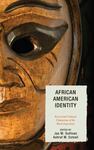
African American Identity: Racial and Cultural Dimensions of the Black Experience
2014
Jas M. SullivanJas M. Sullivan and Ashraf M. Esmail's African American Identity: Racial and Cultural Dimensions of the Black Experience is a collection which makes use of multiple perspectives across the social sciences to address complex issues of race and identity. The contributors tackle questions about what African American racial identity means, how we may go about quantifying it, what the factors are in shaping identity development, and what effects racial identity has on psychological, political, educational, and health-related behavior.
African American Identity aims to continue the conversation, rather than provide a beginning or an end. It is an in-depth study which uses quantitative, qualitative, and mixed methods to explore the relationship between racial identity and psychological well-being, effects on parents and children, physical health, and related educational behavior. From these vantage points, Sullivan and Esmail provide a unique opportunity to further our understanding, extend our knowledge, and continue the debate. -
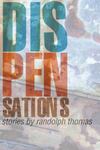
Dispensations: Stories
2014
Randolph ThomasFiction. Indiefab Book of the Year 2014 finalist, DISPENSATIONS pitches teens and adults with drug and alcohol problems against aging and ill- prepared parents. Thomas's characters test the boundaries of family responsibility. Blind to each other's needs and feelings, they are haunted by visions of what their lives might have been and might still be.
"Without the slightest hint of sentimentality [Thomas evokes] a great, unspoken compassion for all who are broken, lost, or forgotten."--James Wilcox -

Handbook of Damage Mechanics: Nano to Macro Scale for Materials and Structures
2014
George Z. VoyiadjisThis authoritative reference provides comprehensive coverage of the topics of damage and healing mechanics. Computational modeling of constitutive equations is provided as well as solved examples in engineering applications. A wide range of materials that engineers may encounter are covered, including metals, composites, ceramics, polymers, biomaterials, and nanomaterials. The internationally recognized team of contributors employ a consistent and systematic approach, offering readers a user-friendly reference that is ideal for frequent consultation.
Handbook of Damage Mechanics: Nano to Macro Scale for Materials and Structures is ideal for graduate students and faculty, researchers, and professionals in the fields of Mechanical Engineering, Civil Engineering, Aerospace Engineering, Materials Science, and Engineering Mechanics.
-
Workplace Culture in Academic Libraries: The Early 21st Century
2013
Kelly Blessinger and Paul HrycajWorkplace culture refers to conditions that collectively influence the work atmosphere. These can include policies, norms, and unwritten standards for behavior. This book focuses on various aspects of workplace culture in academic libraries from the practitioners' viewpoint, as opposed to that of the theoretician. The book asks the following questions: What conditions contribute to an excellent academic library work environment? What helps to make a particular academic library a great place to work? Articles focus on actual programs while placing the discussion in a scholarly context. The book is structured into 14 chapters, covering various aspects of workplace culture in academic libraries, including: overview of workplace culture, assessment, recruitment, acclimation for new librarians, workforce diversity, physical environment, staff morale, interaction between departments, tenure track/academic culture, mentoring/coaching, generational differences, motivation/incentives, complaints/conflict management, and organizational transparency.